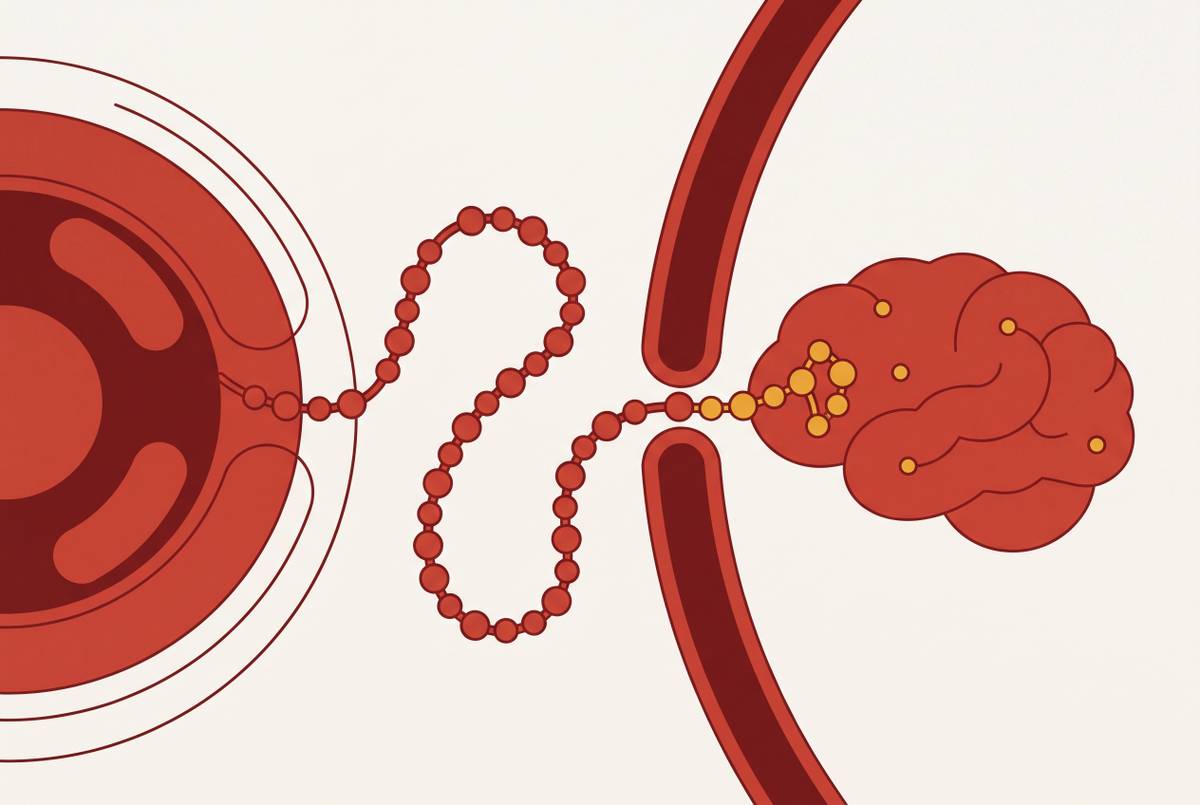
Nasal Absorption Variability and Its Impact on Dose Reproducibility
Nasal drug delivery promises efficacy but struggles with absorption variability across patients.

Intranasal delivery earns serious attention because it sidesteps the two biggest obstacles facing peptide drugs: hepatic first-pass metabolism and the needle. For a large peptide like GLP-1, this matters enormously: oral bioavailability is roughly 0.4 to 1% even with absorption enhancers, and drops to negligible without them, a consequence of enzymatic degradation and poor gut permeability that no amount of formulation cleverness has fully solved. Against that backdrop, and against the needle phobia, infection risk, and adherence erosion that come with injectable GLP-1 therapy, the nasal route looks less like an alternative and more like the structurally correct answer, provided its variability can be brought under control.
That qualifier carries the weight of this entire piece. The nasal route sidesteps hepatic first-pass metabolism and the needle, but it introduces scatter, and the rest of this argument is about where that scatter comes from and what can be done about it.
The nasal cavity as a dynamic biological environment, not a simple membrane
The nasal cavity behaves like a defensive organ doing what it evolved to do: intercept, dilute, and expel foreign material before it penetrates further. It operates with a limited dosing volume of roughly 100 to 150 μL per nostril, which constrains how much drug and excipient can even be delivered in a single actuation. Within that small volume, rapid mucociliary clearance, local enzymatic activity, and substantial inter- and intra-patient variability all act simultaneously on whatever has just been sprayed in.
Three anatomically distinct regions handle this drug differently. The olfactory region, tucked high and posterior in the nasal cavity, is the gateway to direct CNS delivery, and its distinct function is the reason device targeting matters so much for brain-directed therapeutics.
Layered on top of this regional anatomy is a clock running against every formulation. Mucociliary clearance renews the mucus layer roughly every 10 to 20 minutes, so residence time becomes the enemy of absorption for any drug that cannot bind to the mucosa or penetrate it quickly. Mucus viscosity and pH vary further still: healthy nasal mucosa is pH 5.5 to 6.5, but that figure climbs above 7 in conditions like rhinitis, shifting drug ionization, solubility, and permeation according to the individual patient's inflammatory state at the moment of dosing.
Put these pieces together and two patients can get the identical nominal dose from the identical device and still end up with meaningfully different systemic exposures, because each patient's biological environment absorbs and clears drug at different rates. That is the diagnostic foundation for everything that follows: anatomical variability, enzymatic variability, and clearance variability are three separate problems, and each will need its own engineering response.
Pharmacokinetic scatter and clinical dose reproducibility
This variability is not an abstraction that formulation scientists worry about in isolation. This variability appears as measurable scatter in pharmacokinetic data, with consequences for how a drug is dosed, approved, and tolerated. In a clinical study of healthy elderly individuals, the coefficient of variation for intranasal rivastigmine AUC was roughly double that of the intravenous reference dose. Same molecule, same nominal dose, and switching the route of administration alone more than doubled the spread in systemic exposure across the study population.
Regulators have had to build that scatter into their expectations rather than treat it as a manufacturing defect to be eliminated. In practice, a variability allowance of roughly 30% is now routinely applied to intranasal pharmacokinetic parameters, covering dosing, absorption, and elimination, as a working accommodation for the biological differences documented in the previous section.
For drugs with a narrow therapeutic window, or for peptide biologics like GLP-1 analogues where titration governs both how well the drug works and how well a patient tolerates it, this scatter is not a footnote. But the argument misses what happens after the injection is prescribed: injectable delivery buys reproducibility at the cost of patient compliance, and a theoretically precise dose that a patient eventually stops taking produces worse clinical outcomes than a slightly noisier dose the patient actually continues. That tradeoff is why engineering the nasal route's reproducibility, rather than abandoning the route altogether, is the project worth pursuing.
Anatomical sources of variability
Anatomy sets the outer boundary of what any formulation or device can achieve, because where a spray plume lands is determined before the drug itself ever matters. The respiratory region, the primary absorption surface, accounts for roughly 150 to 180 cm² of functional area depending on how it is measured, but that figure swings substantially from one individual to the next. A patient with a larger absorptive surface and a patient with a smaller one, receiving an identical spray, are not receiving an identical dose in any functional sense.
Turbinate geometry, septal deviation, and mucosal swelling from allergies, rhinitis, or infection all reshape deposition patterns and clearance rates, and a fixed device geometry cannot fully compensate for any of them. The olfactory region poses an even sharper version of this problem. For nose-to-brain delivery specifically, this is widely recognized as a central challenge: the device itself has to be built for a target that standard spray geometry simply does not reach.
Researchers now turn to physiologically based biopharmaceutics models and nasal cast simulations, so they can predict regional deposition across different anatomical variants before committing to a device design in the clinic. That shift, from empirical trial-and-error to computational prediction, matters because anatomy cannot be modified. It has to be measured and modeled, and device geometry has to be built around what that modeling reveals rather than around an average nose that may not correspond to any real patient.
Formulation-driven variability and the tools to reduce it
Once a drug reaches the mucosa, the chemistry of the formulation decides whether it survives contact long enough to absorb or gets cleared away within minutes, and this layer sits most directly under a developer's control. Mucus-penetrating nanoparticles resolve this tension by diffusing through the mucus layer rather than binding to it, reaching the epithelial surface intact before clearance carries the surrounding mucus away.
Permeation enhancers address a separate problem: the intrinsic difficulty large molecules have crossing epithelial tissue. The scale of what enhancement can achieve is striking in the case of GLP-1 paired with penetratin, a cell-penetrating peptide. With penetratin, absorption reaches a level that exceeds what the same enhancer achieves via the intestinal route, a result that reframes the nasal barrier as tractable.
Formulators also have to manage pH and tonicity with precision, because getting either wrong introduces its own variability. In situ gelling systems offer a practical answer to several of these pressures at once: liquids that gel on contact with nasal temperature or pH combine the ease of a simple spray with the extended residence time of a more complex mucoadhesive system, without asking the patient to manage anything unusual.
Nanoparticle encapsulation, using materials like PLGA, addresses yet another layer of the problem independently: it protects the peptide payload from enzymatic degradation within the mucus layer, a barrier distinct from clearance and distinct from permeation. That each source of variability, clearance, enzymatic degradation, permeation, has its own dedicated formulation tool is the clearest evidence that this is an engineering problem with engineering solutions, and the bridge to the next layer is that even a perfectly engineered formulation depends on a device that puts it in the right place.
Device-dependent variability and the engineering of reproducible deposition
A formulation cannot rescue a dose that never reaches the right region of the nasal cavity. Device design sits upstream of formulation performance. Standard nasal spray pumps were built for the anterior respiratory region, and they produce variable plume geometry, variable droplet size distributions, and variable deposition patterns depending on actuation force, spray angle, and a given user's technique on a given day. They shift between patients and between uses by the same patient.
Droplet size alone governs much of this. Next-generation devices, including bidirectional nasal sprays and precision olfactory delivery technology, have been developed specifically to narrow this range and improve deposition efficiency.
The SipNose device offers one of the clearest demonstrations of what device engineering alone can achieve. It produced high reproducibility in midazolam absorption into the brain comparable to intravenous administration, though blood levels were lower than with IV dosing, and the result was attributed to the reproducibility of delivery over a large surface area in the nasal cavity. That is a meaningful distinction. It shows that engineering consistent, broad-surface deposition can narrow the variability gap even when the drug and its chemistry stay exactly the same. Device design is not a secondary lever behind formulation but a primary one in its own right.
What the field still lacks is a validated, clinically relevant link between how a patient actually administers a spray, where in the nose it deposits and dissolves, and what clinical outcome follows. Nasal cast studies and physiologically based biopharmaceutics models are starting to close that gap, at least at the modeling stage, by predicting deposition across different anatomical variants before a device geometry gets locked in for clinical testing. Those models are the bridge connecting device engineering back to the anatomical variability described earlier, and they point toward the translational questions taken up later in this piece.
Why nanoparticle platforms address multiple variability layers simultaneously
Nanoparticle carriers occupy an unusual position in this problem because a single particle can be engineered to respond to several variability layers at once. Particle size and surface charge further govern both how the particle interacts with the mucosa and whether it can take advantage of the olfactory uptake pathway into the brain, and all of these properties can be specified at the design stage rather than left to whatever biology a given patient happens to present.
PLGA nanoparticles encapsulating liraglutide, for instance, significantly protected the drug from degradation in simulated gastric and intestinal fluids, a result demonstrated for the oral route but built on a formulation principle, polymer encapsulation shielding a peptide from enzymatic attack, that transfers directly to the nasal enzymatic barrier described earlier. That transferability is the real value of the nanoparticle approach: it is a platform, not a one-off fix. Addressing inadequate mucosal absorption and short mucosal retention time together, within one engineered particle, is what makes nanocarrier design distinct from formulation tweaks that solve only one barrier at a time.
The GLP-1 case for dose reproducibility: why getting the nasal route right matters for neurological applications
Nowhere does dose reproducibility matter more concretely than in the neurological applications now being explored for GLP-1 receptor agonists, where insufficient exposure to brain tissue may explain results that have otherwise looked disappointing. GLP-1 receptors are expressed throughout the central nervous system, and in a large Veterans Affairs observational study of individuals with type 2 diabetes, GLP-1 receptor agonists were associated with reduced rates of neurocognitive disorders, including Alzheimer's disease and dementia. That epidemiological signal is substantial enough to take seriously, even though observational data cannot establish causation on its own.
The ELAD trial of liraglutide adds a more direct, if mixed, piece of evidence. In 2025, a meta-analysis of 15 randomized controlled trials found that GLP-1 receptor agonists did not improve memory and cognition in Alzheimer's disease compared to placebo. So how should you read that null result against the VA data and the ELAD structural finding? Researchers increasingly attribute it to inadequate CNS penetration through the systemic route, treating the negative trial as evidence of a delivery limitation and leaving the biological validity of the GLP-1 target itself intact.
That reframing is why nose-to-brain administration has drawn growing research interest as a route that could meaningfully enhance CNS penetration and improve cognitive outcomes in conditions like Alzheimer's and Parkinson's disease. A related application reinforces the same logic: GLP-1 receptor agonists influence dopamine transporter function and dopamine release in mesolimbic pathways, and low-dose semaglutide has shown signal in reducing alcohol consumption and craving in adults with alcohol use disorder, an indication where direct CNS delivery is especially compelling given the pathways involved.
Across every one of these indications, reproducible dose delivery to the olfactory region functions as the mechanism of action, not a pharmacokinetic detail to optimize after the fact. That is the thread connecting everything in this piece: anatomy, formulation, and device design are not separate engineering exercises running in parallel. They converge at the olfactory epithelium, and how well they converge will shape whether GLP-1's neurological promise can be realized.
What still stands between engineering reproducibility and clinical translation
The engineering tools surveyed in this piece, mucus-penetrating particles, permeation enhancers, in situ gels, reproducible-deposition devices, physiologically based modeling, are increasingly well characterized at the bench. The harder obstacle now is translating that bench-level characterization into clinical performance at scale. Preclinical nanoparticle results frequently fail to carry their performance characteristics forward into human studies, limited by insufficient long-term safety data and uncertainty about what happens over repeated dosing.
Manufacturing poses its own unsolved problem. Engineering can narrow the distribution of outcomes across a patient population, but it cannot collapse that distribution to a single point, so any regulatory framework for this route has to accommodate a residual band of variability.
The field still lacks validated, clinically relevant product attributes that connect how a patient administers a spray to where it deposits to what clinical outcome follows, and without that chain of evidence, bridging in vitro performance to in vivo reproducibility requires large, expensive clinical programs. The evidence assembled here suggests that framing is the wrong one: neither alone is sufficient, and the strongest answer is co-development of formulation and device, guided by physiologically based modeling that accounts for anatomical variation before a product ever reaches a clinical trial.
None of this amounts to a claim that the variability has been fully controlled. It amounts to something more specific and more useful: each discrete source of variability identified here, anatomical, enzymatic, clearance-driven, device-dependent, now has a corresponding engineering response under active development. What separates a reliably reproducible dose from an unpredictable one is not a single breakthrough but the systematic, coordinated optimization of all these layers together.
Sources
- Advances in Nasal Biopharmaceutics to Support Product Development and Therapeutic Needs - PMC
- Device and method for aerosolized delivery of substance to a natural orifice of the body
- Full article: Advances in mucoadhesive and mucus-penetrating materials, nano-formulations, and in situ gelling systems for nasal drug delivery
- Intranasal drug delivery: Unlocking the nose-to-brain route for central nervous system therapies - ScienceDirect
- Bioequivalence Assessment for Intranasal Rapid‐Acting Drug Products - PMC
- Challenges and strategies for nose-to-brain delivery in treating neurological disorders: TFO Collections: Vol 0, No null
- Full article: A comprehensive insight of innovations and recent advancements in nanocarriers for nose-to-brain drug targeting