GLP-1 Receptor Agonists and Neurodegeneration Research
Brain receptors built for blood sugar control may slow Alzheimer's and Parkinson's decline.

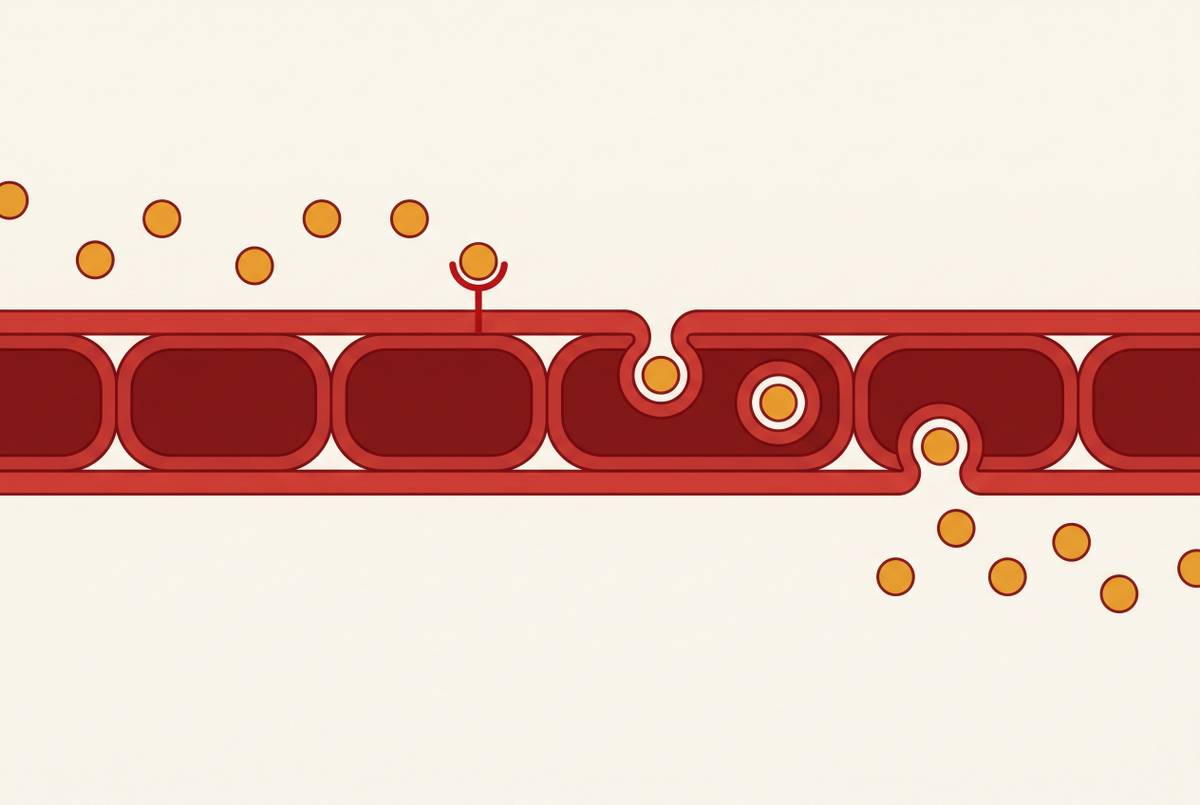
GLP-1 receptor agonists were built to lower blood sugar and reduce body weight, but the receptors they act on sit throughout the brain, in regions with no direct role in glucose control. That anatomical fact is the real subject of this piece: what the GLP-1 system looks like inside the central nervous system, why that distribution makes Alzheimer's and Parkinson's disease plausible targets, and what human trials have and have not shown so far.
Why GLP-1 receptors belong in the brain
GLP-1 receptors show up on neurons and glial cells across the hippocampus, cortex, hypothalamus, and basal ganglia, Gandhi and Parhizgar (2025) find. Those four regions are not an odd grab bag. They are the structures most directly tied to memory, executive function, and motor control.
That alignment matters because it changes the nature of the claim being made about these drugs. A molecule that happens to drift into brain tissue as a side effect is a different scientific proposition than a molecule acting on a receptor system the brain already uses for its own signaling. GLP-1 receptors in the CNS are not a accident of pharmacology. They form a working anatomical network, one that gives drug developers something to aim at rather than something to hope for.
The basal ganglia connection points toward Parkinson's disease, where motor circuitry depends on intact dopaminergic signaling in exactly that region. The hippocampal and cortical distribution points to Alzheimer's disease instead, where memory loss and executive decline track damage to those same structures. The diseases differ, and so do their symptoms, but the same receptor family sits in both sets of affected tissue. A receptor built for appetite and insulin release is also doing work in the hippocampus, and that overlap is the starting point for everything that follows.
The shared biological logic of neurodegeneration and metabolic dysfunction
Alzheimer's and Parkinson's disease have neurological names, but you find their biology working through endocrine territory. Insulin resistance, failing cellular metabolism, and chronic inflammation occur in both conditions, and GLP-1 signaling was built to act on all three in the pancreas and periphery, long before anyone asked if the same signaling could matter in the brain.
That overlap is what turns the idea of repurposing a diabetes drug for dementia and Parkinson's from an opportunistic longshot into a mechanistically grounded hypothesis. If Alzheimer's and Parkinson's disease involved none of the metabolic failure that GLP-1RAs were built to correct, finding these receptors in the hippocampus would be a curiosity and not much more. Insulin resistance and metabolic breakdown appear in brain tissue affected by both diseases, so if a drug restores insulin sensitivity and metabolic function elsewhere in the body, it can plausibly do similar work in the brain.
Researchers at Oxford, led by De Giorgi and colleagues (2025), describe GLP-1RAs as offering an "aetiology-agnostic" intervention pathway, one that targets metabolic, inflammatory, and neurobiological processes shared across multiple neurodegenerative conditions rather than attacking a single disease-specific cause. That framing explains an otherwise odd editorial fact: the Gandhi and Parhizgar review of GLP-1RAs in Alzheimer's and Parkinson's disease appeared in a journal of endocrinology, not a journal of neurology. The science does not sit cleanly inside either field. It sits at the junction between them, which is exactly where a metabolic drug and a set of neurodegenerative diseases were always going to meet. What remains is to specify what that junction looks like at the level of cells and pathways.
The four mechanisms that make GLP-1RAs biologically plausible as neuroprotectants
Four overlapping cellular processes make up the mechanistic case for GLP-1RAs as neuroprotective agents: restoring insulin signaling, supporting mitochondrial function, suppressing neuroinflammation, and clearing misfolded proteins. Each targets a feature of Alzheimer's or Parkinson's pathology directly, and the four do not operate in isolation from each other.
Start with insulin and tau. GLP-1RAs enhance insulin and AKT signaling in the brain, and that enhancement inhibits an enzyme called GSK-3β, which plays a role in tau pathology, the protein tangling process central to Alzheimer's disease, Gandhi and Parhizgar (2025) report. A drug correcting insulin resistance in the brain is, by the same mechanism, acting on one of the molecular drivers of tau accumulation.
Mitochondrial support follows a similar logic. GLP-1RAs increase mitochondrial biogenesis and ATP production, and both diseases share a failing cellular energy metabolism, so restoring that energy supply gives neurons a better chance at survival, the same review finds. Neurons depend on a steady energy supply, so if a cell runs short on ATP, it has less capacity to manage the downstream stress of protein misfolding or inflammatory signaling.
Neuroinflammation is the third piece. GLP-1RAs reduce inflammatory signaling through the NF-κB and NLRP3 pathways, which suppresses microglial activation and inflammasome signaling, Gandhi and Parhizgar (2025) report. Chronic neuroinflammation drives both Alzheimer's and Parkinson's disease, so a mechanism that calms that inflammatory signaling is acting on a shared disease driver rather than a symptom specific to one condition.
The fourth mechanism concerns protein clearance. GLP-1RAs promote the cellular cleanup of toxic proteins through autophagy and lysosomal clearance, a process directly relevant to amyloid-beta in Alzheimer's disease and alpha-synuclein in Parkinson's disease, the same source reports. A fifth supporting pathway, activation of CREB and BDNF signaling, adds neurotrophic support that helps keep neurons alive and functioning, rounding out the mechanistic picture.
What ties these four processes together is that none of them is specific to a single disease. They work at the level of shared cellular pathways, not disease-specific targets, so the same drug class generates testable hypotheses across Alzheimer's, Parkinson's, and other neurodegenerative conditions at the same time. Preclinical models of both diseases have shown reduced neuroinflammation, improved mitochondrial function, and better clearance of toxic proteins, with downstream gains in cognition and dopaminergic neuron survival, Gandhi and Parhizgar (2025) report.
That is a compelling picture in cell culture and animal models. Whether it holds up in human trials is a separate question, and the answer so far is mixed enough to demand its own close reading, starting with Parkinson's disease, where the clinical signal is strongest.
What clinical trials in Parkinson's disease have shown
Parkinson's disease has produced the most consistent clinical evidence for GLP-1RAs so far: two agents have shown motor benefits in controlled trials, but not every result has pointed the same direction.
A Phase 3 trial in the UK (ISRCTN14552789, n=194), led by Vijiaratnam and colleagues (2025), tested exenatide at 2 mg once weekly in people with moderate-stage Parkinson's disease who were already on standard dopaminergic treatment. The results sit within a growing evidence base rather than standing as a single definitive answer, Gandhi and Parhizgar (2025) note, and that evidence base includes a contrasting case worth examining closely: the failure of NLY01.
NLY01 is a large, pegylated compound, and pegylation plus size limit how much of a drug can cross into the central nervous system. That pharmacokinetic limitation likely explains why NLY01 underperformed where other, smaller GLP-1 agents have shown more encouraging signals, the same review finds. The contrast matters beyond this one compound: molecular design, as much as the GLP-1 mechanism itself, decides whether a given drug can act on the brain targets described in the previous section.
A meta-analysis by Elghanam and Kim (2026) adds a secondary but meaningful finding. Within the Parkinson's disease subgroup, GLP-1RAs significantly improved depression symptoms relative to control. Depression is not a motor symptom, so an improvement there suggests that the CNS effects of these drugs extend past the dopaminergic circuitry most associated with Parkinson's disease and into mood regulation as well.
What clinical trials in Alzheimer's disease have shown
Alzheimer's disease trials have produced biological signals worth taking seriously, but none has yet shown a cognitive improvement large enough to call clinically meaningful. The therapeutic promise remains open rather than confirmed.
The ELAD trial tested liraglutide and found improvement in temporal lobe and cortical measures on MRI compared with placebo, an intriguing result given that those brain regions are central to Alzheimer's disease. The trial did not meet its primary metabolic endpoint, Gandhi and Parhizgar (2025) report. A related finding from FDG-PET imaging showed preserved cerebral glucose metabolism in treated participants. Reduced glucose metabolism in the brain is a known hallmark of Alzheimer's progression, so preserving it is a mechanistically coherent signal, even though the trial's cognitive scales did not move in step with it.
Semaglutide is being tested in the EVOKE and EVOKE plus trials, two Phase 3 studies enrolling participants over 104 weeks, with final cognitive endpoints still pending. Gandhi and Parhizgar (2025) describe these trials as the definitive test of whether the preclinical neuroprotective mechanisms described earlier can translate into measurable clinical benefit at scale. Until those results report out, the Alzheimer's evidence base rests on signals that are smaller and more indirect.
One of those signals comes from the Elghanam and Kim (2026) meta-analysis, which pooled data from 1,260 participants in non-diabetic populations and found a small, statistically significant improvement in global cognition. But measured against the minimal clinically important difference threshold, the probability that this improvement would translate into a benefit patients could actually notice was close to zero. The same meta-analysis found that GLP-1RAs were associated with poorer verbal fluency, a result backed by high-certainty evidence. That finding complicates what would otherwise read as a cautiously encouraging picture: a drug class showing promise on global cognition measures showed a measurable cost on at least one specific language task.
Biomarker results across these trials have also been inconsistent, Elghanam and Kim (2026) find. That inconsistency points to an unresolved problem for the field: no one has yet established which biomarkers reliably predict which patients will see real clinical benefit, leaving researchers without a dependable early signal for what the EVOKE results might show. That gap in surrogate endpoints connects to a larger and more basic uncertainty: whether the drug reaches brain tissue at all, an uncertainty that sits underneath both the Parkinson's and Alzheimer's results discussed so far.
The core unresolved question: whether the drug reaches the brain
The central open problem in this entire line of research is not whether the four mechanisms described earlier are real. Preclinical work supports them. Can current injectable GLP-1RA formulations get enough of the drug into the brain, at a high enough concentration, to actually engage those mechanisms in a living human patient?
Researchers remain divided on this point. Gandhi and Parhizgar (2025) note that some studies find measurable penetration of the drug into the central nervous system, but others find little to no direct entry, and they conclude that much of the clinical effect may travel indirectly through peripheral signaling or vagus nerve pathways instead of the drug acting on brain tissue directly. No published GLP-1RA trial has yet met the evidentiary standard that would settle this question: direct proof that the drug reaches brain tissue and changes the signaling cascades downstream of the four mechanisms described earlier.
The NLY01 failure, raised earlier in the Parkinson's disease section, tells you more in this light. A pegylated compound with limited capacity to cross the blood-brain barrier failed to match the benefits seen with smaller molecules that carry a more plausible route into the brain, the same review finds. Molecular size and how strongly a compound binds to albumin in the bloodstream are two of the pharmacokinetic factors behind this divergence. Smaller molecules with weaker albumin binding tend to penetrate the central nervous system more, but large, pegylated compounds mostly stay out, Gandhi and Parhizgar (2025) report.
That distinction reframes the mixed clinical results from the two previous sections. A Parkinson's trial and an Alzheimer's trial use different GLP-1 agents, so they are not just testing the same biological hypothesis twice. They may be testing it under two very different sets of delivery conditions, where one compound reaches its target tissue at meaningful concentrations and another does not come close. To resolve that question, you need direct measurement of brain drug concentrations alongside the kind of large-scale cognitive outcome data that the EVOKE trials are built to provide, and until that evidence arrives, the gap between a biologically plausible mechanism and a clinically proven treatment stays open.
Sources
- GLP-1 receptor agonists in Alzheimer’s and Parkinson’s
- Evaluating the clinical effects of GLP-1 receptor agonists for Alzheimer's and Parkinson's diseases using minimal clinically important difference: systematic review and meta-analysis - PMC
- GLP-1 receptor agonists in Alzheimer’s and Parkinson’s disease: endocrine pathways, clinical evidence, and future directions
- Glucagon-like peptide-1 receptor agonists for major neurocognitive disorders - PMC
- Frontiers
- Liraglutide in mild to moderate Alzheimer’s disease: a phase 2b clinical trial