Volume of Distribution and CNS Penetration for Therapeutic Peptides
Large peripheral distribution doesn't guarantee brain access for therapeutic peptides.
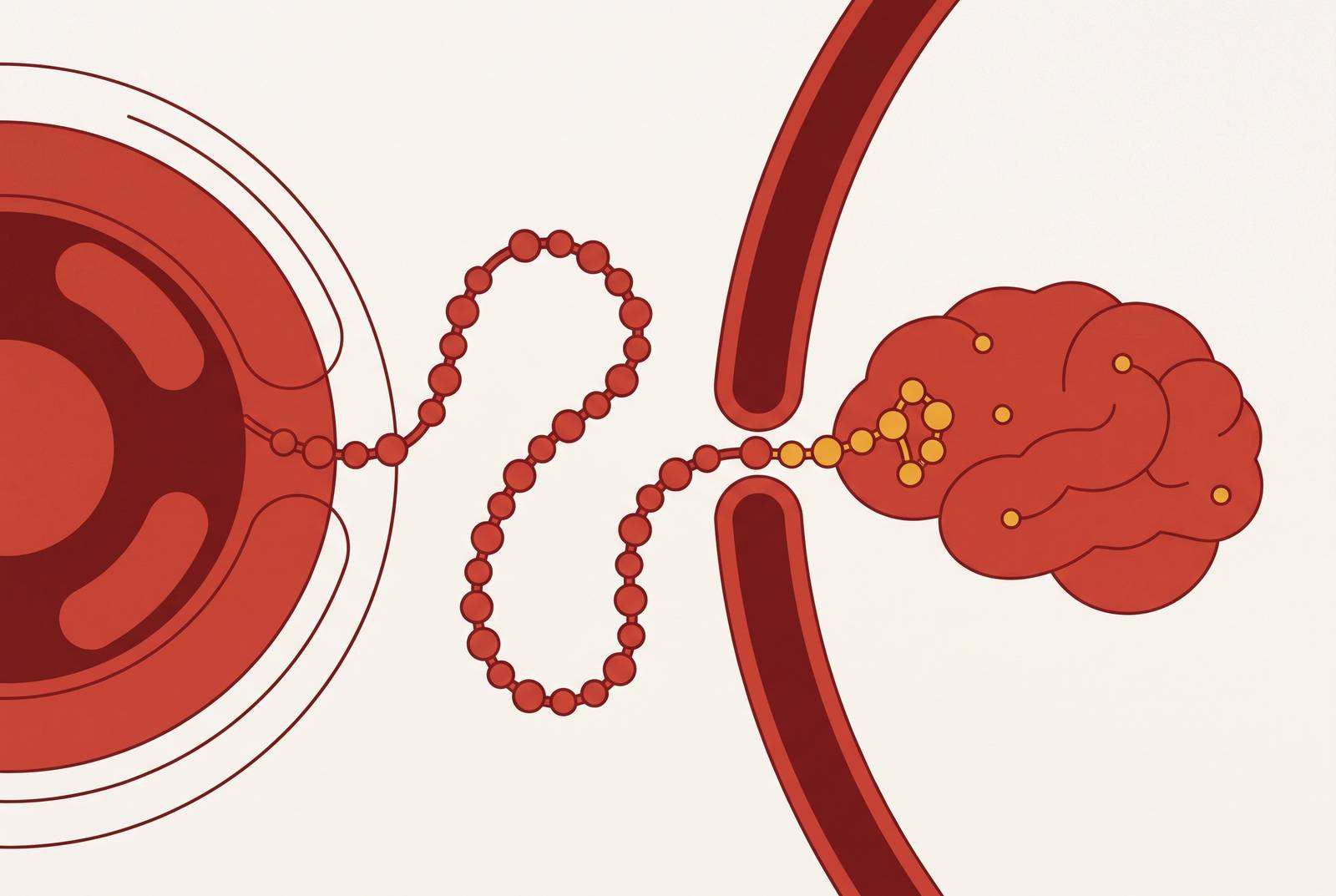
Volume of distribution and CNS penetration are the two pharmacokinetic properties that best explain why therapeutic peptides so often fail to reach the brain, even when they circulate at high concentrations everywhere else in the body. Understanding those two properties precisely, rather than loosely, is what turns nose-to-brain delivery from a nice-to-have into something closer to a scientific requirement.
What volume of distribution measures
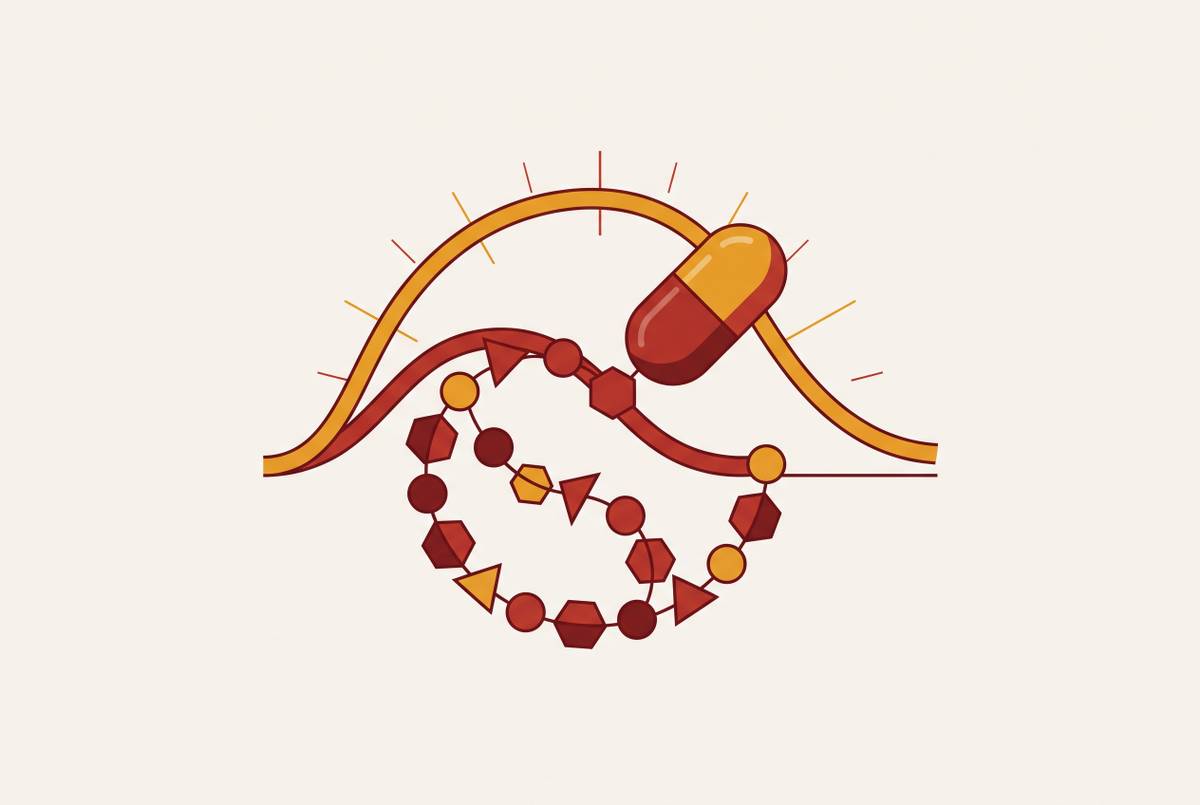
Volume of distribution, Vd, is a calculated number. It's derived from the relationship between the amount of drug dosed and the concentration measured in plasma, which makes it a proportionality constant more than a location.
What does a large Vd actually tell you? Mostly that a drug has left the bloodstream and gone looking for tissue to bind to; muscle, fat, liver, wherever the chemistry favors partitioning. A high Vd is often read as a good sign, evidence that a drug is getting "out there" into the body. But out there is not the same as in the brain, and this is where a lot of pharmacokinetic reasoning quietly goes wrong.
A large peripheral Vd tells you almost nothing about whether a drug has entered the brain. That cuts against the intuitive read of a PK chart. Systemic Vd and brain-accessible Vd are separate pharmacokinetic constructs, and they are not interchangeable.
For small molecules the divergence between the two is often modest. For peptides, it can be enormous. A peptide can show a Vd that looks perfectly reasonable, even generous, while brain tissue registers next to nothing. That gap is the subject of everything that follows.
Why the BBB makes Vd a misleading guide for CNS drug design
To understand why that gap exists, it helps to look at what actually stands between the bloodstream and brain tissue. The blood-brain barrier is not a single membrane; it's a layered structure built from non-fenestrated endothelial cells, astrocytic end-feet wrapping around capillaries, pericytes embedded in the basement membrane, and a set of specialized transporters and efflux pumps that decide, molecule by molecule, what gets through.
None of this is a design flaw. It's a filter that evolved to keep the brain's chemical environment stable, and it does that job well. But the same filter that protects neurons from toxins and pathogens also blocks the overwhelming majority of therapeutic candidates, and biologics in particular tend to be stopped cold.
Even when some fraction of a drug does make contact with the endothelium, efflux transporters can pump it right back out, and whatever remains may already be bound up by plasma proteins before it ever gets that far. So a drug may show a large apparent Vd from peripheral distribution and still register negligible CNS levels, because the two numbers are measuring different things.
That is the structural reason Vd cannot serve as a stand-in for CNS penetration, especially for biologics. A protein or peptide drug might distribute beautifully across peripheral tissue and still never clear the barrier. Anyone designing for CNS effect needs a separate line of evidence, not an inference borrowed from systemic numbers.
The specific pharmacokinetic liabilities that make peptides especially poor CNS penetrators
So what actually gets through, when something does? CNS-approved small molecules typically fall in the 150–500 Da range with high lipophilicity, the classic profile for passive transendothelial diffusion Delivery of Therapeutic Peptides and Proteins to the CNS. That's the template the barrier rewards.
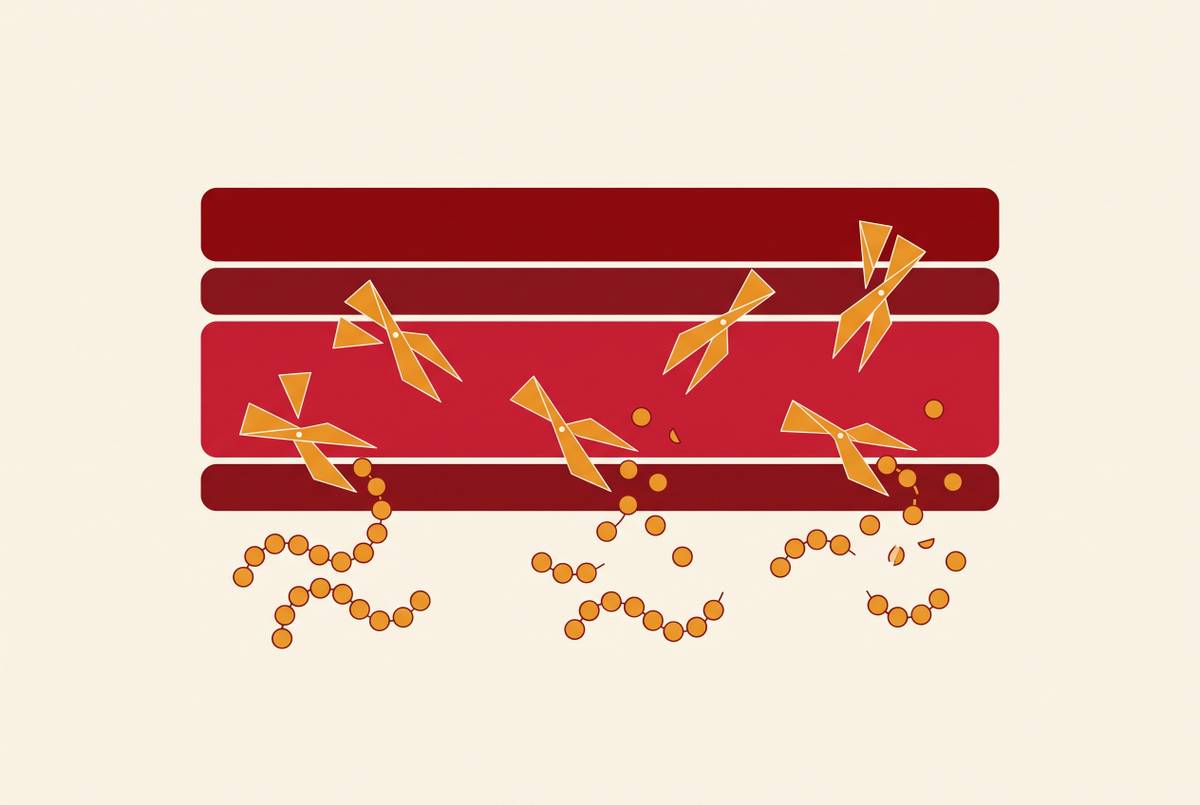
Peptides miss that template on almost every axis. Most are poorly lipid-soluble, which rules out passive diffusion as a crossing mechanism from the start. Layer onto that a short circulating half-life, and the window during which the molecule can even interact with the barrier shrinks further. Enzymatic degradation, both in plasma and at the barrier itself, chips away at whatever fraction survives that window.
A June 2025 review in the journal Peptides states that peptide delivery to the brain is challenging because of low metabolic stability, poor BBB penetration, and incompatibility with oral administration, and in combination these typically force parenteral administration while still failing to solve CNS access Cell-penetrating peptides as facilitators of cargo-specific nanocarrier-based drug delivery. Injection fixes oral bioavailability. It does nothing about the barrier itself; the drug still enters systemic circulation and still has to face the same wall.
The mismatch appears clearly on paper, with high systemic exposure, a Vd that might look entirely adequate on a pharmacokinetic report, and brain concentrations too low to matter therapeutically. This is the exact trap the first two sections warned about, playing out at the level of an actual drug class.
GLP-1 peptides and the CNS: why brain exposure matters therapeutically
Why does any of this matter beyond the lab bench? GLP-1 receptors sit in brain regions with obvious clinical stakes, including the hippocampus, the frontal cortex, and the substantia nigra, regions tied to memory, mood, and motor control. Receptor activation there triggers intracellular cascades, cAMP/PKA, PI3K/Akt, MAPK, that collectively support neuronal survival.
None of this is a new idea. The neuroprotective potential of GLP-1 was described as early as 2002, predating the first GLP-1 agent approved for type 2 diabetes, exenatide, in 2005 mdpi.com. The metabolic use case came after the neurological hypothesis, not before it.
Once receptors were confirmed in the CNS, and early evidence suggested some GLP-1 receptor agonists could cross the barrier at all, the field started looking past diabetes toward addiction, dementia, and other neurological indications. But how does this connect back to Vd? If a drug's CNS effect depends on how much of it reaches brain tissue, and systemic injection produces uneven, unpredictable CNS penetration, then the route of delivery is not a logistics question but a determinant of which diseases are even reachable.
That's the point where the abstract pharmacokinetic argument turns into a clinical one. A molecule with the right receptor biology and the wrong delivery architecture doesn't get to prove itself.
How the nasal route sidesteps the systemic Vd problem entirely
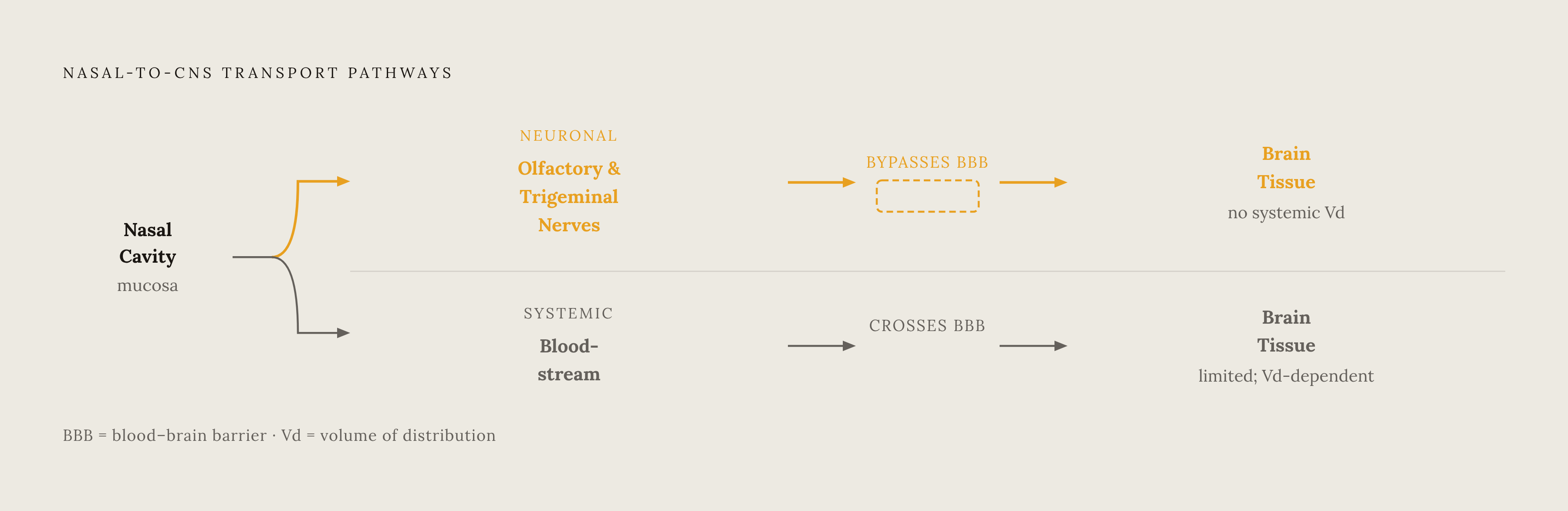
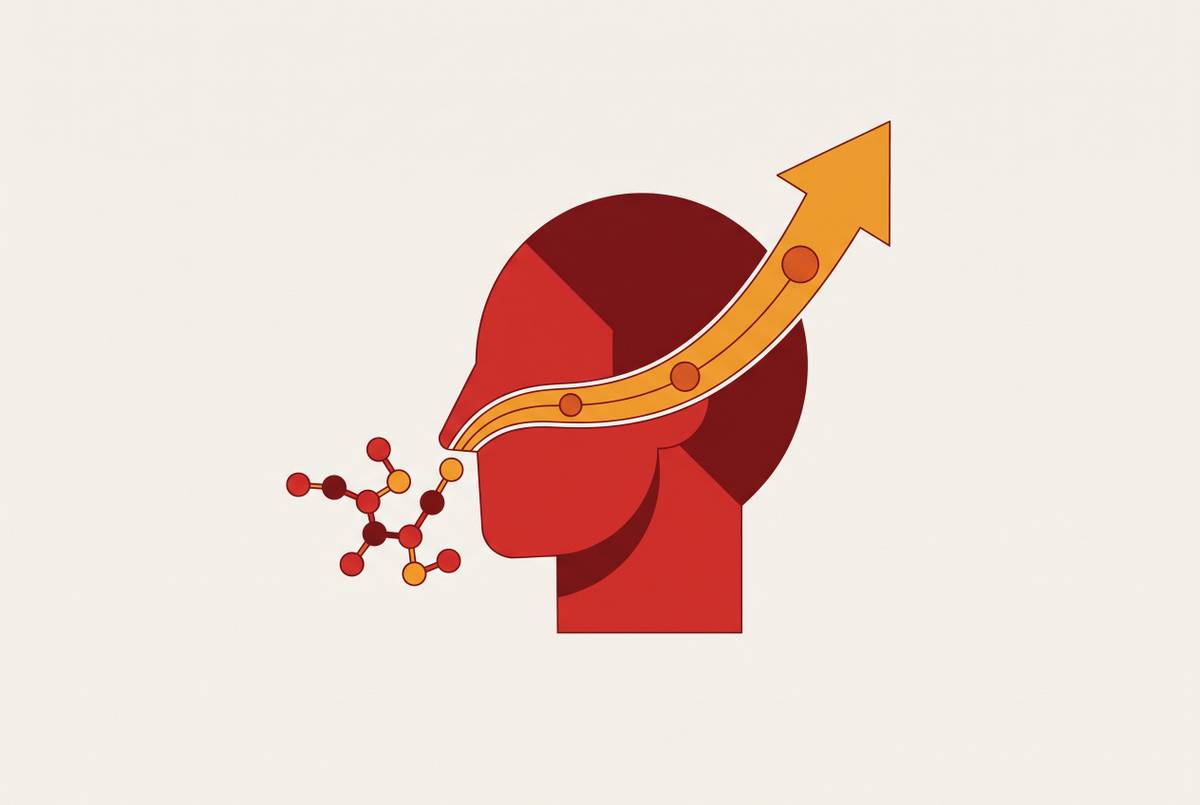
Nose-to-brain delivery didn't emerge as a convenience. It exists specifically to get around the barrier rather than negotiate with it.
The Peptides review from June 2025 describes two transport routes from the nasal cavity into the CNS Cell-penetrating peptides as facilitators of cargo-specific nanocarrier-based drug delivery. The dominant one runs through the nasal mucosa into the olfactory and trigeminal neuronal systems, delivering drug directly into brain tissue without ever touching the endothelial barrier. A secondary route lets some peptide permeate into the bloodstream and enter through the conventional systemic path, crossing the BBB the ordinary way.
That neuronal pathway is what makes the whole route pharmacokinetically distinct. It puts drug into the CNS without requiring BBB crossing at all. Intranasal administration also skips first-pass metabolism, and can reach meaningful CNS concentration at doses far lower than systemic administration would require; instead of needing a large systemic dose for a small CNS payoff, a small nasal dose can produce a disproportionately large CNS effect.
Put simply, routing the drug through olfactory and trigeminal neurons produces CNS exposure that has nothing to do with systemic Vd. It arises independently of it, with no dependence on it. That's a genuinely different pharmacokinetic model, representing a fundamental departure from the old one.
Formulation constraints that must be solved for intranasal peptide delivery to work
None of this comes free, though.
Mucociliary clearance adds a second constraint. The mucus layer renews roughly every 10 to 20 minutes, which leaves a narrow absorption window before whatever hasn't been taken up gets swept away. Administration technique matters too. Get the angle or the spray pattern wrong and the dose ends up deposited somewhere useless, or swallowed, or dripped back out, cutting the effective dose further.
Put those constraints together and it becomes clear why free, unformulated peptide sprayed into the nose so often underperforms. The route itself works. It's that raw peptide, without formulation support, cannot survive the volume limit and the clearance window long enough to be absorbed in useful quantity.
A 2025 review out of the University of Manchester, published in Molecular Pharmaceutics, made a related point: the field still hasn't systematically built physiological detail into its pharmacokinetic models for intranasal delivery, and that gap is treated as an area needing real development, not a solved problem Cell-penetrating peptides as facilitators of cargo-specific nanocarrier-based drug delivery. So the pharmacokinetic case for nose-to-brain delivery is strong. The formulation science needed to actually realize it is still being built.
How nanoparticle systems address the formulation constraints that defeat free peptides
That gap between rationale and execution is exactly where nanoparticle formulation comes in. Nanocarriers are tunable in ways free peptide is not: size, surface chemistry, and coating can all be engineered to interact deliberately with specific transport routes in the nasal epithelium.
A review in Nano Research lays out several surface modification strategies built for this purpose. Cell-penetrating peptides attached to the carrier surface help drive uptake across epithelial cells. BBB shuttle peptides are designed for the rarer case where the carrier does end up in the bloodstream, exploiting receptor-mediated transcytosis to get across the barrier from that side. Homing peptides steer the carrier toward specific, pathologically relevant regions of the brain rather than dispersing evenly.
Mucoadhesive coatings hold the carrier against the epithelium longer than the 10 to 20 minute mucus turnover would otherwise allow, directly countering clearance. Some designs go further, using stimuli-responsive or controlled-release chemistry so the payload doesn't release until the carrier has actually crossed the epithelial barrier, ideally somewhere in the olfactory bulb or trigeminal region rather than in the mucus itself.
A March 2026 review in the International Journal of Nanomedicine argued that the next real step for the field is tying mechanistic understanding of nasal transport pathways to the rational design of these nano-delivery systems, rather than treating formulation and biology as separate tracks. A July 2026 paper in ACS Chemical Neuroscience, from a Newcastle University team, found that every nanomedicine platform approved so far still struggles with targeting specificity, an engineering problem that remains real and current, not a footnote from an earlier era. This is active, unsettled work. Anyone claiming otherwise is overselling it.
What the peptide therapeutics market's own composition reveals about the delivery gap
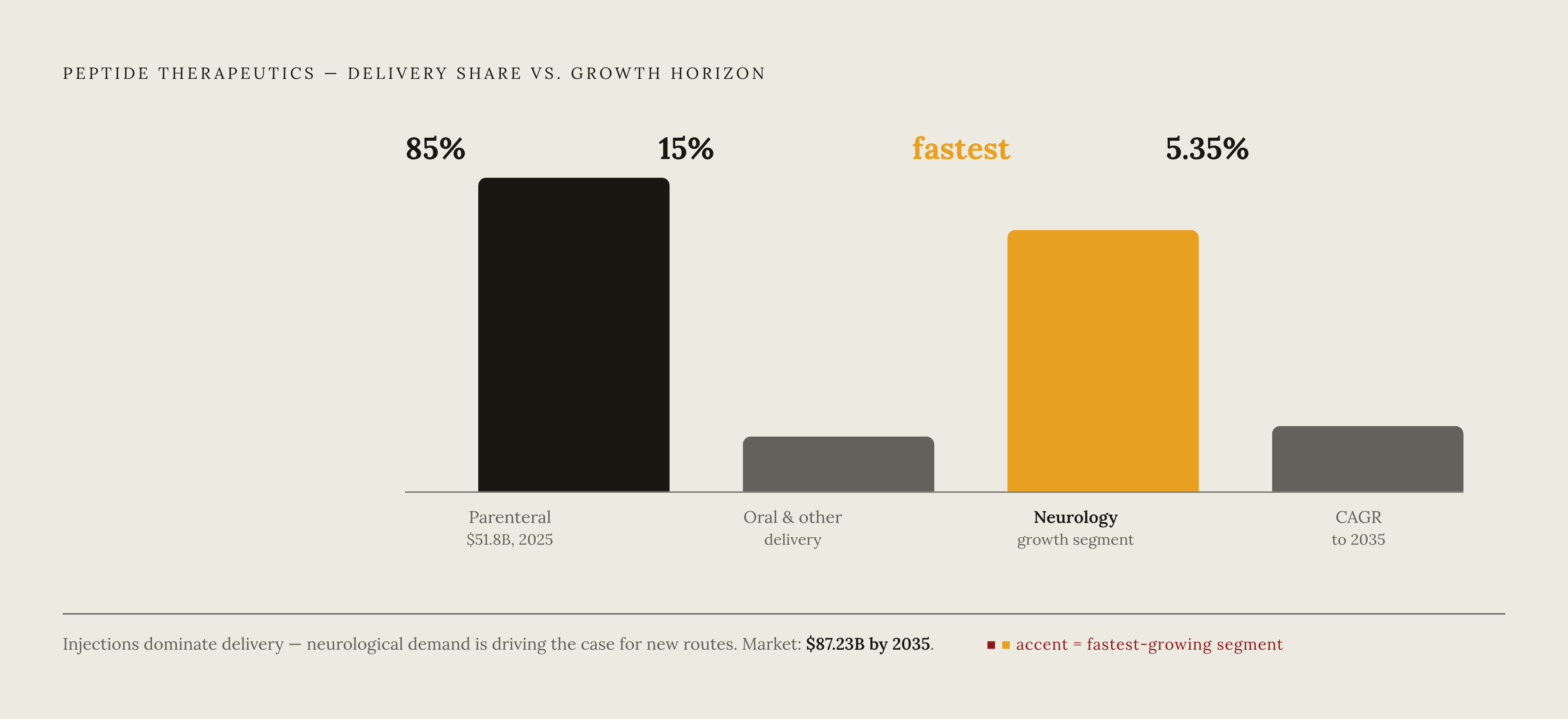
Step back from the mechanism for a moment and look at how the market has actually organized itself. The global peptide therapeutics market was valued at 51.8 billion dollars in 2025, moved to 54.57 billion in 2026, and is projected to reach 87.23 billion dollars by 2035, a compound annual growth rate of 5.35 percent across that span, according to a report from Towards Healthcare.
Parenteral administration, injection, dominated that market with roughly 85 percent share in 2025. That number reflects the absence of any alternative to injection. It's what happens when a field has no route besides injection that reliably solves bioavailability and, for CNS targets, brain access at any real scale.
The oral segment is expected to grow at the fastest CAGR, but oral peptide delivery faces its own severe bioavailability barriers and does not solve CNS penetration. Meanwhile the neurological disorders segment is projected to grow faster than any other therapeutic category. Demand is shifting directly toward the indications that need CNS penetration most and that the current injectable-dominant model serves worst. North America held about 40 percent of the total market in 2025.
The parenteral segment dominated with approximately 85% of the market in 2025, reflecting that the field defaults to injection because no other route has reliably solved bioavailability and CNS access for peptides at scale. That's a different kind of dominance, and it's worth naming as such.
Why solving Vd and CNS penetration for peptides is a platform problem, not a single-drug problem
Every barrier covered here, poor lipophilicity, enzymatic breakdown, efflux pumping, exclusion at the endothelium, mucociliary clearance, belongs to the peptide class and to the delivery route itself. None of it is specific to one molecule.
That distinction matters more than it might first appear. A nanoparticle platform built to navigate these barriers isn't a single product tied to a single indication; it's reusable machinery. The same transport logic that could carry a GLP-1 analog into the brain could, in principle, carry a peptide aimed at addiction circuitry, or one targeting neuroinflammation in dementia, or some other CNS payload entirely. The 2025 Nano Research paper framed this directly: peptide-based functionalization of nanocarriers enables precise, multidimensional targeting across payloads.
That reframes what GLP-1 receptor distribution in the hippocampus, frontal cortex, and substantia nigra actually represents. Those are targets systemic injection reaches only imprecisely today. A nose-to-brain platform capable of predictable CNS exposure would make them accessible in a way injection has struggled to manage.
The literature agrees on where this leaves the field. From the July 2026 ACS Chemical Neuroscience paper to the March 2026 International Journal of Nanomedicine review, intranasal nanoparticle CNS delivery is described as an open frontier. The pharmacokinetic argument for why it matters is no longer in dispute. What's left is engineering, the unglamorous, iterative work of actually building the carriers. For platforms built on deep, foundational nanoparticle IP, decades of research on how particles interact with biological barriers, this is not a speculative bet but a logical extension of work already done.
Sources
- Peptide Therapeutics Market to Uplift USD 87.23 Bn by 2035
- Peptide-based brain distribution improvement strategies for nano delivery systems in CNS diseases treatment
- Cell-penetrating peptides as facilitators of cargo-specific nanocarrier-based drug delivery - PMC
- Peptide-Based Delivery Systems: Selected Insights into Cell-Penetrating Peptides | ACS Chemical Neuroscience | ACS Publications
- Delivery of Therapeutic Peptides and Proteins to the CNS - PMC
- Peptide therapeutics: current status and future opportunity with focus on nose-to-brain delivery☆ - ScienceDirect
- Correction: Are Glucagon-Like Peptide‑1 (GLP-1) Receptor Agonists Central Nervous System (CNS) Penetrant: A Narrative Review - PMC