Absolute Bioavailability of Intranasal Peptide Formulations
Four variables govern how much intranasal peptide reaches your bloodstream.
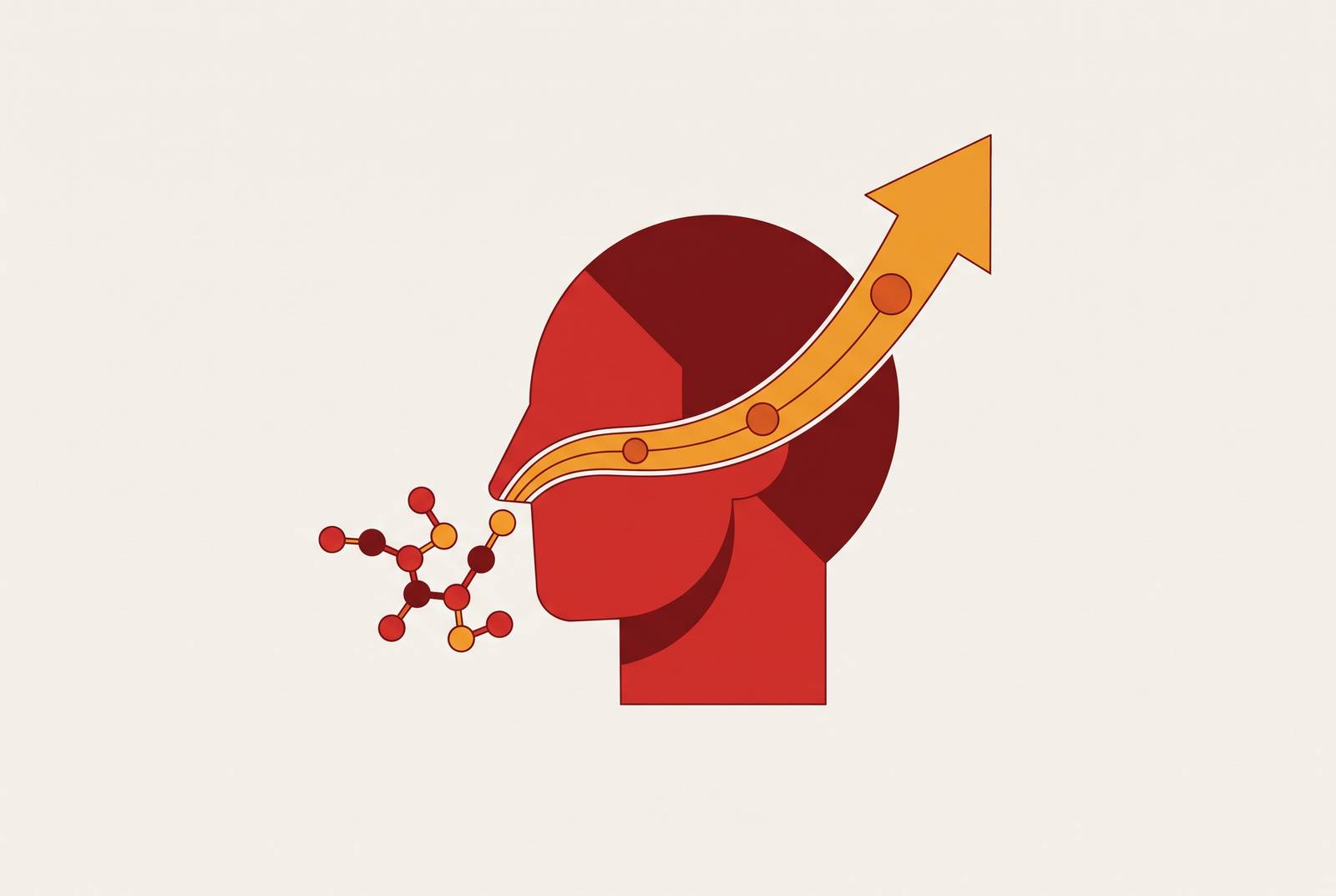
Absolute bioavailability is the single number that tells you what fraction of a nasal peptide dose actually makes it into systemic circulation unchanged, measured against the same dose given intravenously frontiersin.org. For intranasal peptides, that number is governed by a specific, learnable set of variables, molecular weight, mucosal permeability, enzymatic degradation, and delivery pathway, and understanding how they interact explains both why nasal peptide absorption is currently so limited and what engineering approaches might change that. Absolute Bioavailability of Intranasal Peptide Formulations.
Why absolute bioavailability is harder to measure for intranasal peptide formulations than for other routes
Absolute bioavailability, by definition, treats an intravenous dose as the 100% reference point, since nothing is lost to absorption when a drug goes straight into the bloodstream frontiersin.org. Everything else, oral tablets, transdermal patches, nasal sprays, gets scored as a fraction of that reference. This is different from relative bioavailability, which just compares one non-IV route against another and tends to get conflated with the absolute figure in a lot of the literature, muddying comparisons between studies that aren't actually measuring the same thing.
Nasal delivery complicates the measurement in ways oral dosing doesn't. A peptide that reaches the brain via the olfactory or trigeminal nerve may never appear in plasma in any meaningful quantity, so a drug could be doing what it's supposed to do in the brain while looking, on paper, like it barely absorbed at all.
Measuring only plasma bioavailability would call that a failure. No standardized regulatory framework yet exists for reporting intranasal-to-CNS bioavailability the way plasma bioavailability gets reported for other routes, so the field is, in a real sense, grading itself without an agreed-upon rubric. Intranasal absolute bioavailability is structurally harder to measure than for other routes because of variable deposition, mucociliary clearance that begins before absorption is complete, and dual absorption pools comprising systemic uptake via nasal vasculature versus direct CNS uptake via neural pathways. The blood-brain barrier blocks more than 98% of small molecules and virtually all large molecules from systemic entry into the brain, establishing why nasal-to-CNS transport is worth measuring separately from plasma bioavailability Intranasal Peptide Delivery to the Brain.
The nasal anatomy that makes peptide absorption possible, and constrains it
Two regions inside the nasal cavity do fundamentally different jobs. The respiratory epithelium is large, richly supplied with blood vessels, and built for systemic absorption, while the olfactory epithelium is much smaller, wired directly into the nervous system, and built for a different kind of delivery entirely. That olfactory tissue contains something like 6 million olfactory receptor neurons in a person, and their axons thread through tiny openings in the cribriform plate straight into the olfactory bulb, a direct anatomical shortcut around the blood-brain barrier Intranasal Peptide Delivery to the Brain.
Within that olfactory route sit two distinct transport pathways. One is intraneuronal: the drug gets taken up into the olfactory neurons themselves and moves along the axon toward the brain, a process that takes hours to days. The other is extraneuronal, where the molecule diffuses through the extracellular spaces around the nerve bundles and reaches the cerebrospinal fluid and brain tissue directly, a route that can work in a matter of minutes rather than days. That speed difference matters enormously for anything meant to act quickly.
A third route exists as well, straight into systemic circulation via nasal blood vessels, but it doesn't bypass the blood-brain barrier at all, so it only matters for peptides aimed at organs outside the brain.
But how much of the nose can actually reach that CNS-directed olfactory pathway frontiersin.org Maeng and Lee, Frontiers in Pharmacology? Less than you'd hope, at least in humans. The olfactory epithelium covers something like 40 to 50% of nasal surface area in rodents, yet less than 10% in humans, a structural ceiling on how much of any given dose can even reach the tissue that connects to the brain frontiersin.org Maeng and Lee, Frontiers in Pharmacology. The trigeminal nerve (Cranial Nerve V) provides a second CNS pathway, innervating both respiratory and olfactory mucosa and projecting to the brainstem; per Akita et al Akita et al., Journal of Controlled Release. (Journal of Controlled Release, 2021), a CPP-modified GLP-2 derivative reached the trigeminal sensory nucleus within 3 minutes of intranasal dosing in mice Akita et al., Journal of Controlled Release. The olfactory region accommodates only 25–200 μL, so formulation volume and spray geometry directly govern how much drug reaches this region versus the respiratory mucosa or is swallowed frontiersin.org.
The molecular weight ceiling and mucosal permeability as the primary bioavailability determinants
Molecular weight turns out to be the single biggest gatekeeper. Peptides below roughly 1,000 daltons tend to move through nasal mucosa reasonably well, while anything larger runs into the tight junctions between epithelial cells and the mucus gel layer sitting on top of them, both of which act like a sieve tuned against bigger molecules. Semax is the clearest real-world proof of this. At about 813 daltons, it achieves nasal bioavailability in the range of 60 to 70%, has been approved in Russia as a nasal spray since 1994, and was later added to the country's list of essential medicines in 2011, making Semax a peptide under the weight ceiling performing at a level most nasal formulations never approach frontiersin.org helloregimen.com.
GLP-1 peptides are substantially larger than 1,000 daltons, placing them firmly in the low-permeability regime by default, and molecular weight is central to GLP-1 nasal delivery rather than incidental to it. A 2022 review in Frontiers in Pharmacology by Maeng and Lee found that bioavailability for nasally administered hydrophilic peptides and proteins over 1,000 daltons is very low, because of weak permeability and vulnerability to proteolysis in the nasal mucosa. That single sentence ties molecular weight directly to the enzymatic barrier, because it means size and degradation aren't two separate problems stacked on top of each other. They're intertwined.
Hydrophilicity makes the peptides harder to absorb because of their size. Nasal epithelial membranes are lipophilic, and most therapeutic peptides are hydrophilic, so they face a kind of double jeopardy: too large to diffuse passively through the membrane, and too polar to slip through via any transcellular route. Charge and conformational flexibility push the needle a bit either way, cationic peptides bind more readily to the negatively charged mucus glycoproteins coating the epithelium, and flexible peptide backbones present a smaller effective size to the tissue than rigid ones. Neither factor overturns the basic rule that molecular weight sets, but they explain some of the variation seen between peptides of similar size.
Enzymatic degradation in the nasal mucosa as the second major barrier to bioavailability
The nasal mucosa isn't a passive surface. Peptidases, proteases, and aminopeptidases sit throughout the epithelium and within the mucus layer itself, actively working on anything that lands there. That creates a race condition: a peptide is being broken down at the same moment it's trying to diffuse toward the epithelial surface, and whatever fraction survives that race is what actually gets absorbed, either into blood or into a neural pathway.
GLP-1-class peptides carry a particularly heavy enzymatic burden. GLP-1 itself has a plasma half-life measured in minutes because of DPP-4 cleavage, and the nasal mucosa presents a broadly similar enzymatic environment, so the molecule doesn't get a reprieve just because it entered through the nose instead of the bloodstream. Repeated exposure to the same peptide can trigger local immune responses that alter mucosal integrity and enzyme activity over time, a consideration that matters most for anyone thinking about chronic, not single-dose, administration.
A formulation that opens tight junctions between epithelial cells but does nothing to shield the peptide from proteases leaves enzymatic degradation unaddressed, and that is the easier obstacle to solve. The Frontiers in Pharmacology review names weak permeability and enzymatic degradation as co-equal root causes of low bioavailability for large hydrophilic peptides, and stresses that both need addressing at the same time, not one after the other. That's a meaningfully different design philosophy than treating degradation as an afterthought once permeability is solved.
Mucociliary clearance as the time constraint that makes everything harder
Even a peptide that's small enough and shielded enough still has to beat the clock. Mucociliary clearance renews the mucus layer roughly every 10 to 20 minutes, and anything not absorbed within that window gets physically swept toward the nasopharynx and swallowed frontiersin.org. It's driven by ciliary beat frequency, which is more or less fixed biologically and not something you can safely dial down pharmacologically without damaging the epithelium in the process frontiersin.org. A separate analysis from Khan and colleagues, published in Expert Opinion on Drug Delivery, puts the number in the same range, most deposited material clearing within 15 to 20 minutes, which narrows the effective absorption window for any peptide that isn't protected.
What happens to the swallowed fraction? It runs straight into hepatic first-pass metabolism, which is a strange kind of irony: a nasal dose that misses its window effectively becomes an oral dose, complete with the poor oral bioavailability that made peptide drugs difficult to administer in the first place. Clearance isn't just a loss mechanism; it actively converts the failure mode of one route into the failure mode of another.
Does the peptide need to move faster than clearance can remove it, or does it need to stick around longer than clearance normally allows? Either answer, or some combination of both, shapes what kind of carrier system makes sense, and that choice runs through the nanoparticle and mucoadhesion strategies discussed further down. On top of the biology, patients vary. Septum shape, turbinate structure, and mucosal thickness differ from person to person, and that variation feeds directly into the inter-individual scatter seen in bioavailability data, which is part of why clinical results for the same formulation can look inconsistent across a study population.
How delivery device design and drug deposition site interact with these biological variables
Where the spray actually lands matters as much as what's in it. Conventional nasal sprays deposit most of their payload in the anterior respiratory region, simply because that's the part of the nasal cavity closest to a forward-pointing nozzle, but the olfactory epithelium, the tissue that actually connects to the brain, sits high and toward the back of the nasal cavity, out of easy reach. Droplet size adds another layer to this. Larger droplets hit the anterior mucosa and drain away quickly, while smaller droplets travel further back but risk being inhaled deep enough to end up in the lungs instead of the nose.
This is where device engineering starts to matter as much as the formulation chemistry sitting inside it. Bidirectional nasal sprays and precision olfactory delivery systems are built specifically to redirect the spray plume toward the olfactory region, aiming to increase the fraction of a dose that can actually reach the neural pathways rather than settling in respiratory tissue that only leads to systemic circulation.
Patient technique adds real-world noise to all of this. Head position, timing of inhalation, and the angle at which the device is held all shift where the dose ends up, so a formulation that performs beautifully in a controlled clinical setting can underperform once it's in the hands of someone using it at home without supervision. That's less a formulation problem than a compliance problem, but it appears in the bioavailability numbers either way.
Part of the translational gap between animal studies and human trials is really a device gap in disguise. Since rodents have olfactory epithelium covering 40 to 50% of nasal surface area, a basic dropper delivers a respectable fraction of dose to the target tissue without much engineering effort frontiersin.org Maeng and Lee, Frontiers in Pharmacology. In humans, where that same tissue covers less than 10% of the surface area, reaching it at all requires a device built deliberately for that purpose frontiersin.org Maeng and Lee, Frontiers in Pharmacology. This volume constraint interacts with device design: since the olfactory region accommodates only 25–200 μL, even a perfectly aimed device must deliver a small, concentrated bolus rather than a large-volume spray frontiersin.org.
Nanoparticle encapsulation as the most studied formulation strategy for overcoming the bioavailability barriers
If molecular weight, enzymatic exposure, and clearance are three separate barriers, nanoparticle encapsulation is the strategy that tries to answer all three with one design. A carrier small enough to move through the mucus mesh, sturdy enough to shield its payload from proteases, and sticky enough to adhere to or slip through the epithelium addresses degradation, permeability, and clearance simultaneously, rather than requiring three separate fixes.
Several carrier classes are under active study. Polymeric nanoparticles, PLGA being the most common example, are biodegradable, allow tunable release rates, and can be functionalized on the surface for targeting. Liposomes offer a membrane composition that mimics the body's own cells and an established safety record. Nanoemulsions carry lipophilic payloads in a liquid core that spreads quickly across the mucosal surface. Solid lipid nanoparticles trade some of that spreadability for physical stability and slower, sustained release. And thermosensitive gels, one version built around semaglutide, stay liquid at room temperature for easy dosing but firm up into a gel once they hit body temperature, which helps the formulation linger on the mucosa longer than a simple liquid would.
Mucoadhesion deserves its own mention as a specific target, separate from the carrier material itself: a formulation with one shot at absorption differs from one that gets sustained exposure over an afternoon.
A broader review by Majie and colleagues, published in Biomaterials Advances, surveyed nanoparticles, liposomes, nanoemulsions, and thermosensitive gels for intranasal peptide delivery in Alzheimer's disease, and the sheer range of carrier types under investigation says something on its own: no single platform has pulled ahead of the pack yet.
One caveat needs to stay attached to all of this. Most of the nose-to-brain nanoparticle data comes out of rodent models, where the olfactory epithelium covers 40 to 50% of nasal surface area, a proportion that simply doesn't exist in the human nose, and translating these results reliably will require large-animal validation that most of these platforms haven't completed yet Maeng and Lee, Frontiers in Pharmacology. The olfactory pathway permits transport of nanosized particles typically less than 200 nm in diameter, making particle size a design specification rather than just a manufacturing parameter frontiersin.org. Mucoadhesion serves as a specific engineering target, with surface coatings such as chitosan, hyaluronic acid, and lectins anchoring particles to the mucosal surface to extend contact time beyond the 10–20-minute clearance window; a study referenced in the research brief found that HA-CP incorporation prolonged nasal residence to approximately 4 hours frontiersin.org. Lectin-decorated PEGylated dendrigraft poly-L-lysine (DGL) nanoparticles developed by Yang et al., functionalized with Aleuria aurantia lectin and the Aβ-binding peptide KLVFF for receptor-mediated uptake, demonstrated augmented autophagy, reduced Aβ deposition, and rescued memory deficits in AD model mice, showing how surface targeting can direct particles to specific CNS lesion sites once they arrive.
Cell-penetrating peptides as a complementary strategy for improving epithelial translocation
Nanoparticles aren't the only route past the epithelial barrier. The mechanism runs through either electrostatic attraction, for cationic CPPs binding the negatively charged cell membrane, or hydrophobic insertion, with entry happening via endocytosis or direct translocation across the membrane, essentially smuggling a larger peptide past a barrier it couldn't cross alone. That's a peptide that was systemically inert turning into something CNS-active, purely because of the route and the CPP modification working together Akita et al., Journal of Controlled Release.
CPPs and nanoparticles aren't competing strategies. They can be combined, with CPPs attached to a nanoparticle's surface to get the protective benefits of encapsulation and the membrane-crossing benefits of the peptide sequence at once, and the Frontiers in Pharmacology review describes CPPs as something close to a universal vehicle, applicable across a range of different intranasal peptide platforms rather than tied to any one of them. Still, open questions remain. Repeated dosing raises immunogenicity concerns that haven't been fully worked out, and the relationship between how well a CPP crosses a membrane in a dish and how well it performs in a living system isn't reliably linear, so in vitro promise doesn't always carry through cleanly. Maeng and Lee (Frontiers in Pharmacology, 2022) define cell-penetrating peptides (CPPs) as short peptide sequences, typically 5–30 amino acids, capable of crossing cell membranes and carrying conjugated or co-administered cargo molecules with them. The most-studied CPPs, TAT (derived from the HIV transactivator of transcription protein) and penetratin (derived from the antennapedia homeodomain), have both been conjugated to peptide antidiabetics including insulin and exendin-4 for intranasal delivery.
Where clinical evidence currently stands: benchmark peptides and their data
Pulled together, the picture is one of a field with a working theory and a handful of proof points, rather than a settled catalog of solutions. Larger, more clinically prominent peptide classes, GLP-1 analogs among them, are on the other side of that same threshold, and their nasal bioavailability struggles for exactly the reasons laid out across this piece: molecular weight, enzymatic vulnerability, and a clearance window that doesn't leave much margin for error frontiersin.org.
The nanoparticle and CPP strategies described above represent the field's current answer to that gap Akita et al., Journal of Controlled Release. What ties the whole subject together is that bioavailability in this route was never going to be one number explained by one cause. It's a function of size, chemistry, enzymes, timing, and hardware, all interacting at once, and the engineering strategies gaining traction are the ones built to address more than one of those variables at the same time.