Nanoparticle Surface Functionalization for Blood-Brain Barrier Crossing
Ligand choice and particle chemistry must match the barrier's biology to reach the brain.
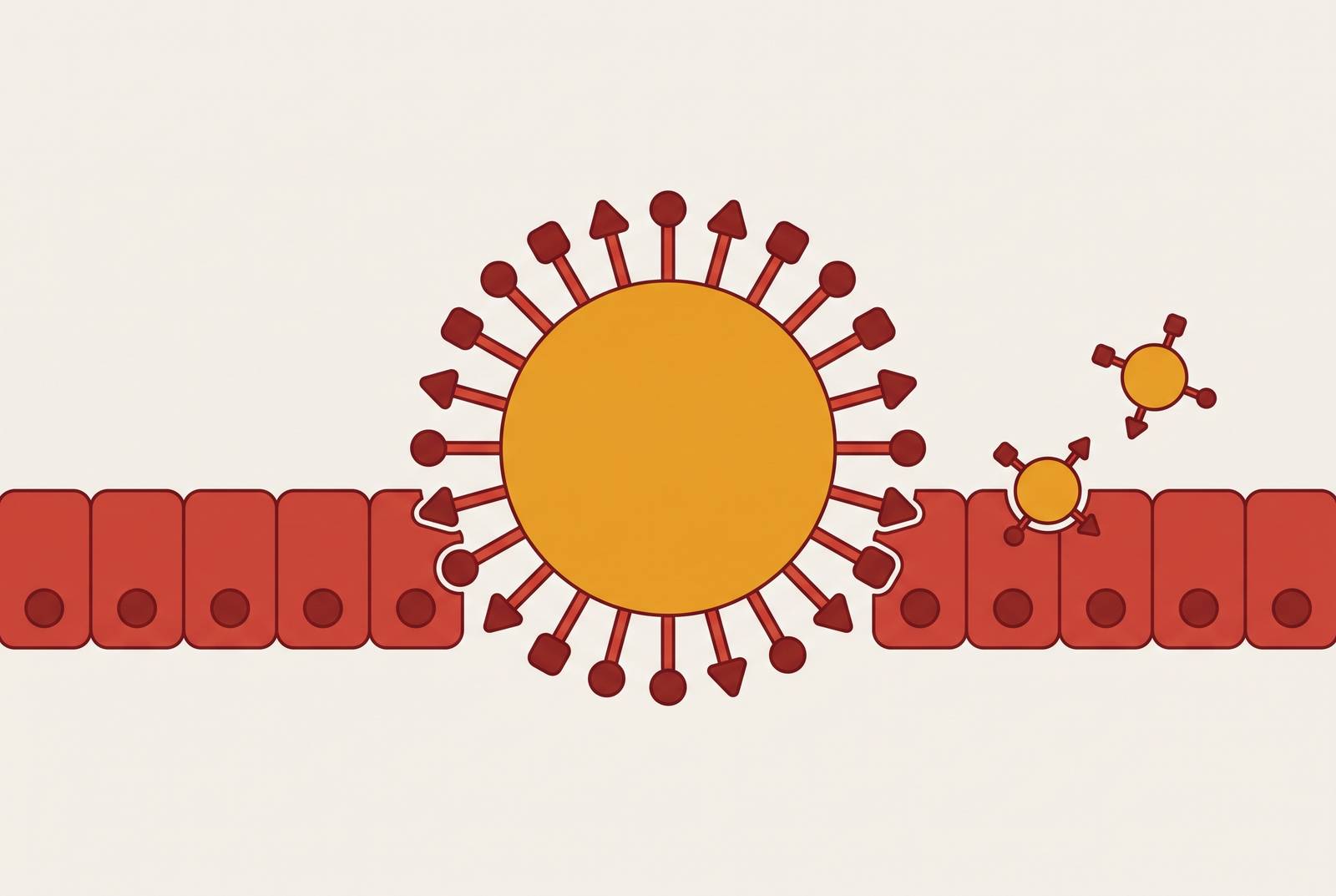
Nanoparticle surface functionalization for blood-brain barrier crossing matches a carrier’s surface chemistry to the biology of its delivery route. For nanoparticle nose-to-brain delivery for CNS peptide indications, that means protecting peptides and supporting mucosal retention and olfactory uptake along a route that bypasses the vascular barrier.
Why the blood-brain barrier is a molecular gatekeeper, not just a physical wall
The blood-brain barrier’s selectivity comes from active biology. Brain microvascular endothelial cells form dense tight junctions, reinforced by astrocytic end-feet and pericytes. This protective arrangement excludes toxins but also restricts therapeutic access, helping explain why neurological diseases remain pharmacologically underserved.
Yet the endothelial surface also has receptors that let molecules pass through. These include the transferrin receptor and low-density lipoprotein receptor-related protein 1 (LRP1). Nanoparticle functionalization follows from that distinction, using surface-bound or surface-recruited molecules to make a carrier recognizable to the barrier’s transport machinery.
How receptor-mediated transcytosis turns the barrier's own biology into a crossing mechanism
Receptor-mediated transcytosis (RMT) translates that recognition into a potential route across the endothelial cell. A nanoparticle’s surface ligands bind receptors on the luminal, or blood-facing, membrane, triggering endocytosis. Vesicles then transport the material through the cell before exocytosis releases it on the abluminal, or brain-facing, side.
A parallel pathway, absorptive-mediated transcytosis (AMT), begins with electrostatic attraction between positively charged particles and the negatively charged luminal membrane. Compared with RMT, it has less receptor specificity and gives less control over where particles go off-target. RMT provides the possibility of targeted accumulation in pathological brain regions, but endogenous ligands can compete for binding and saturate the pathway. Engineered ligands and antibody fragments can address that competition through higher affinity or recognition of different receptor epitopes. For this mechanism to work, receptors must be able to reach the molecular signal that surface functionalization provides.
What transferrin, ApoE, and angiopep-2 each do at the receptor level, and why the differences matter
Transferrin, apolipoprotein E (ApoE), and angiopep-2 illustrate distinct ways to construct that signal. Transferrin-conjugated nanoparticles bind TfR1 on brain endothelial cells and enter through clathrin-mediated endocytosis. The receptor’s high expression at the BBB relative to peripheral vasculature makes it a high-selectivity target. Here, the design logic is direct attachment of a recognizable ligand to a carrier.
ApoE-based targeting can instead exploit endogenous recruitment. In the surfactant-adsorption approach, the particle surface recruits ApoE from the bloodstream, providing a route to LRP1 engagement without carrying the ligand as a pre-attached covalent conjugate. Angiopep-2, by contrast, is a peptide derived from the Kunitz domain of aprotinin that binds LRP1 with high affinity. Its smaller size relative to protein ligands permits dense conjugation with less steric interference. Because LRP1 is overexpressed on both BBB endothelium and glioma cells, angiopep-2 also supports a two-step targeting logic of barrier crossing followed by tumor accumulation.
The comparison is therefore between high-selectivity receptor targeting, endogenous ligand recruitment, and compact conjugation with dual-target potential. Across these approaches, endogenous competition, protein-ligand immunogenicity, and conjugation orientation remain concerns, although their importance differs by design. These distinctions explain why choosing a ligand cannot be separated from choosing a route. Lionbio applies that route-matching principle to the nose-to-brain pathway, where the olfactory epithelium and direct olfactory bulb access present different engagement opportunities from systemic vasculature.
Why size and surface charge are not secondary parameters but co-determinants of BBB crossing
Even the right ligand cannot help a particle that is cleared before it reaches brain endothelium. Particles in the sub-200 nm range are generally required for systemic circulation and RMT uptake, while particles of 200–500 nm are inclined to be retained in the spleen. Larger particles are more readily removed by the mononuclear phagocyte system. Size therefore constrains both the opportunity for receptor engagement and transport after binding.
Charge introduces a competing constraint. Moderately positive surfaces promote AMT, but strongly cationic particles invite nonspecific toxicity and rapid opsonization, while strongly negative surfaces face membrane repulsion and faster clearance. With PEG present, a slightly negative to near-neutral zeta potential can limit nonspecific interactions while ligands supply receptor binding. Chen et al., Frontiers in Chemistry 2022 investigated these linked size and charge effects in mesoporous silica nanoparticles. Increasing ligand density can change both zeta potential and hydrodynamic size, partly offsetting better binding, while the BBB’s P-glycoprotein efflux machinery remains a further mechanism for expelling molecules into blood.
What PEGylation contributes to BBB crossing and the trade-off it introduces
PEGylation coats a nanoparticle with polyethylene glycol chains to prolong circulation and reduce immune recognition. The hydrophilic chains form a steric shield that reduces adsorption of opsonins, including complement proteins and immunoglobulins, slowing phagocytic clearance. PEG also shields surface charge and reduces nonspecific interactions with off-target tissues and red blood cells. PEG gives the carrier more time to reach brain endothelium but cannot bring about BBB crossing on its own.
The same shield can obstruct the ligands needed for that contact to become productive. A dense PEG brush can bury targeting conjugates, making it harder for them to bind receptors. NLY01, a PEGylated long-acting GLP-1 receptor agonist and analogue of exendin-4, illustrates the broader trade-off at the drug level. PEGylation extends its half-life but limits BBB penetration compared with smaller, less-modified agonists.
PEG chain-length optimization balances protection with ligand accessibility. Stimuli-responsive PEG shedding instead allows the coating to detach in an acidic tumor microenvironment or upon receptor binding.
How cell-penetrating peptides and molecularly imprinted nanocarriers expand the functionalization toolkit
Cell-penetrating peptides (CPPs) address some manufacturing limitations of protein ligands, while molecularly imprinted polymeric nanocarriers (nanoMIPs) offer synthetic recognition elements. CPPs are short cationic or amphipathic sequences, including trans-activator of transcription (TAT) and poly-arginine, attached to carrier surfaces. They facilitate entry through mechanisms that include membrane disruption, endocytosis, and macropinocytosis. Their small size and high-purity synthesis help keep batches consistent, but because they depend less on receptors, they are also less selective for brain endothelium. CPP-conjugated GLP-1 nanoparticles have demonstrated rapid cognitive benefits in animal models, making them relevant to neurological peptide delivery without establishing clinical efficacy.
NanoMIPs take a different approach by forming polymers around a molecular template, leaving binding cavities that mimic antibody specificity. Their advantages include chemical and thermal stability without cold-chain dependency, tunable physical properties, and drug release built into the polymer matrix. They can also carry ApoE, transferrin, or angiopep-2 functionalization to add conventional RMT targeting to the imprinted carrier. Such designs extend the toolkit rather than automatically eliminating the limitations of added biological ligands. Uniform imprinting at scale remains difficult, and both emerging approaches still face manufacturing, safety, and regulatory work before becoming dependable clinical platforms.
How do nanoparticles deliver peptides to the brain through the intranasal route
Intranasal delivery changes the interface that functionalization must address. The olfactory and trigeminal pathways connect the nasal epithelium to the brain and can bypass the vascular BBB, shifting the design priority from endothelial receptor binding to mucosal retention and neural-pathway uptake. Nasal enzymes can degrade peptides, while mucociliary clearance sweeps particles toward the throat within minutes. Nanoparticles can protect peptide cargo, and surface modification can control release and mucosal permeation.
Chitosan-coated nanoemulsions illustrate this route-specific chemistry. Chitosan increases nasal retention through mucoadhesion and enhances permeation by opening tight junctions in the nasal epithelium. Formulation viscosity provides another lever, with a borneol-modified lipid nanoparticle nasal spray at approximately 39.36 mPa·s significantly increasing olfactory deposition fraction. After intranasal administration, 520-nm PLGA nanoparticles were detected in neuronal bundles, indicating transcellular neuronal transport, while 80-nm and 175-nm particles distributed to other cell types with a faster but different pattern.
The route’s relevance to peptides lies in both exposure and tolerability. For GLP-1 therapeutics, direct delivery toward hypothalamic and hippocampal receptors offers a way to address poor BBB penetration while reducing peripheral activation associated with nausea. Among intranasal nanoparticle approaches, Lionbio’s platform follows this engineering rationale by targeting olfactory and trigeminal access. Selective brain delivery by every nasal formulation remains unproven. Some of the drug may still be swallowed or absorbed peripherally, which affects its delivery.
What the first FDA-approved BBB-crossing biologic reveals about the translation gap
The March 24, 2026 FDA accelerated approval of AVLAYAH (tividenofusp alfa eknm), developed by Denali Therapeutics, marks a decisive translational milestone. Approved for neurologic manifestations of Hunter syndrome in pediatric patients, it is the first biologic engineered to cross the BBB through receptor-mediated transcytosis. The event establishes RMT-based crossing as a clinically validated mechanism. It does not, however, validate every ligand-bearing nanoparticle or settle the efficacy of brain delivery across diseases. A rare, serious pediatric condition and an accelerated approval pathway provided a different route to authorization from the larger, longer trials required for common neurological indications.
Complex nanoparticle formulations must still establish biocompatibility, reproducible production, and workable regulatory classification. Intranasal systems add formulation stability, variable nasal anatomy and mucociliary function, and reproducible delivery devices to that burden. The GLP-1 neurological trials show why delivery remains an important unresolved variable. Liraglutide in the ELAD trial, involving participants with mild-to-moderate Alzheimer's disease without diabetes, attenuated FDG-PET decline and reduced gray matter volume loss over 12 months but did not meet its primary cerebral glucose metabolism endpoint. Those mixed findings leave open the extent and adequacy of brain target engagement.
Semaglutide in EVOKE and EVOKE+, with approximately 1,855 and 1,953 participants respectively, did not outperform placebo for early symptomatic Alzheimer's disease progression despite favorable shifts in AD-relevant biomarkers. These outcomes could reflect incomplete CNS target engagement, but they do not show that too little delivery was the cause. They also leave it unproven whether changing the route would benefit patients. They leave a precise research question, namely whether greater brain exposure with less peripheral activation can translate biological activity into meaningful neurological outcomes.
What the field must solve before functionalized nanoparticles become clinical tools at scale
The remaining work is chiefly engineering, manufacturing, and safety validation rather than establishing that receptor-mediated crossing is possible. For systemic carriers, competitive binding and saturation remain linked to ligand affinity, orientation, and immunogenicity. PEG shedding and chain-length optimization address the shielding problem, but neither has reached clinical use for CNS applications. Manufacturing must preserve ligand density, orientation, and conjugation chemistry because small lot-to-lot differences can produce large differences in vivo. Long-term safety also depends on knowing how long carriers stay, how they are cleared, and whether they can cause inflammation in healthy neurons and glia during chronic dosing.
For intranasal carriers, reproducibility depends on nasal anatomy, mucociliary clearance, mucosal health, and device performance. Device engineering and patient stratification form part of the response, while formulation chemistry can address peptide protection, retention, release, and permeation. This makes nose-to-brain nanoparticles a tractable near-term development path whose clinical value remains to be established. Removing injections and reducing peripheral GLP-1 activation could ease the burden of needles and nausea and might also improve brain target engagement.
The platform could serve more peptide classes and neurological targets, including addiction, dementia, and Parkinson's disease, by adapting its surface chemistry. In Lionbio’s case, that platform logic centers on protecting peptide cargo and optimizing mucosal retention and olfactory uptake. Its value will depend on showing that these properties give reproducible exposure, are acceptably safe, and benefit patients.
Sources
- Functionalized Nanomaterials Capable of Crossing the Blood–Brain Barrier
- Bridging Size and Charge Effects of Mesoporous Silica Nanoparticles for Crossing the Blood–Brain Barrier
- Crossing the Blood-Brain Barrier with Molecularly Imprinted Polymeric Nanocarriers: An Emerging Frontier in Brain Disease Therapy - PubMed
- Targeted Nanoparticles for Drug Delivery Across the Blood–Brain Barrier in Early and Late Stages of Alzheimer's Disease: A Review
- Recent Advances in Nanoparticle-Based Drug Delivery Strategies to Cross the Blood–Brain Barrier in Targeted Treatment of Alzheimer’s Disease
- Nanoparticle-Based Drug Delivery Across the Blood–Brain Barrier: Current In Vivo Evidence, Translational Challenges, and Future Perspectives
- Nanocarrier-based intranasal drug delivery for enhanced neurological disorders treatment
- Nose-to-brain drug delivery: from bench to bedside