Companies Developing Non-Injectable GLP-1 Formulations for Tolerability
Nasal delivery aims to reduce nausea by targeting the brain directly.

Non-injectable GLP-1 formulations address dropout by changing how treatment reaches the patient, but removing the needle does not necessarily remove nausea. Intranasal delivery is still preclinical and aims to give the brain more exposure than the rest of the body, which could let patients keep the therapeutic effects with fewer of the problems that make them stop.
Why so many GLP-1 patients stop treatment before the drug can work
Injectable peptide GLP-1 receptor agonists require daily or weekly subcutaneous administration. Endogenous GLP-1 has an approximately two-minute plasma half-life because DPP-4 rapidly degrades it. Engineering around that fragility makes sustained treatment possible, but a workable drug is not automatically a treatment people can sustain.
Real-world discontinuation exposes the gap between pharmacology and patient experience. Injections, cost and gastrointestinal side effects all make it harder to stay on treatment, and hesitation over needles can keep patients from starting at all. Patients without type 2 diabetes stop at meaningfully higher rates than those with the condition. That difference suggests that the burden weighs more heavily when patients lack a disease-management imperative to persist.
Trials select for tolerant patients and provide more support, so their side-effect discontinuation rates are far below those seen in practice. Research indicates a substantial preference for oral medication and greater likelihood of adherence to oral therapies. Yet preference and tolerability are separate problems, and the field has responded with two structurally distinct engineering paths.
The two engineering paths the field has taken to replace injections
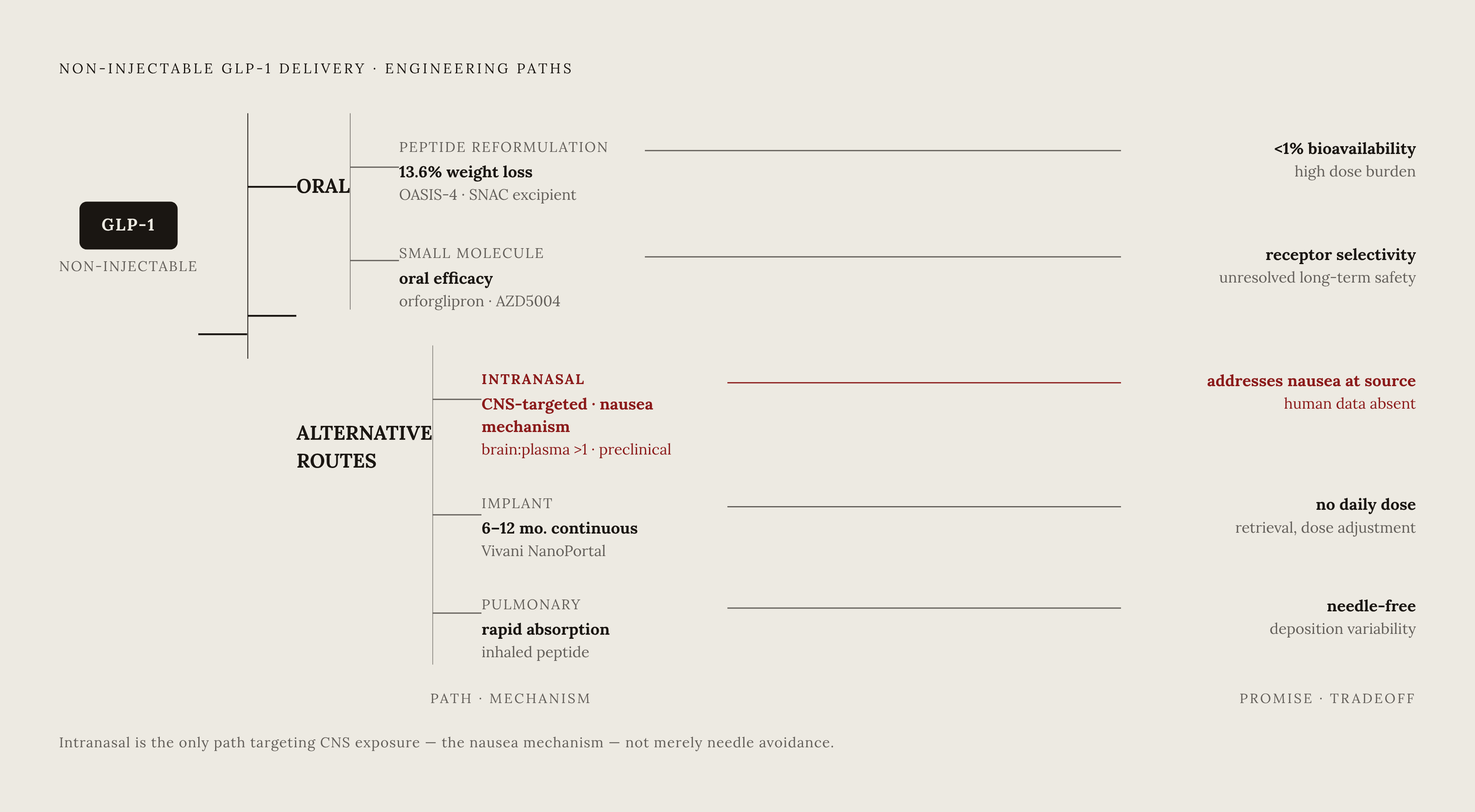
The first path reformulates GLP-1 activity for oral ingestion. Within it, peptide formulations use chemical or excipient engineering to survive the gastrointestinal tract, while small-molecule agonists avoid peptide fragility by using non-peptide compounds that bind the same receptor. Both pursue a familiar way to take medicine. Their central promise is less dependence on needles and injection logistics.
The second path changes the anatomical route. It includes intranasal delivery, long-duration implants and pulmonary approaches, each addressing a different physiological bottleneck. Oral reformulation primarily removes an administration burden, whereas brain-targeted nasal delivery also aims to reduce peripheral exposure implicated in nausea.
How oral peptide and small-molecule GLP-1 drugs reach the bloodstream — and what that costs them
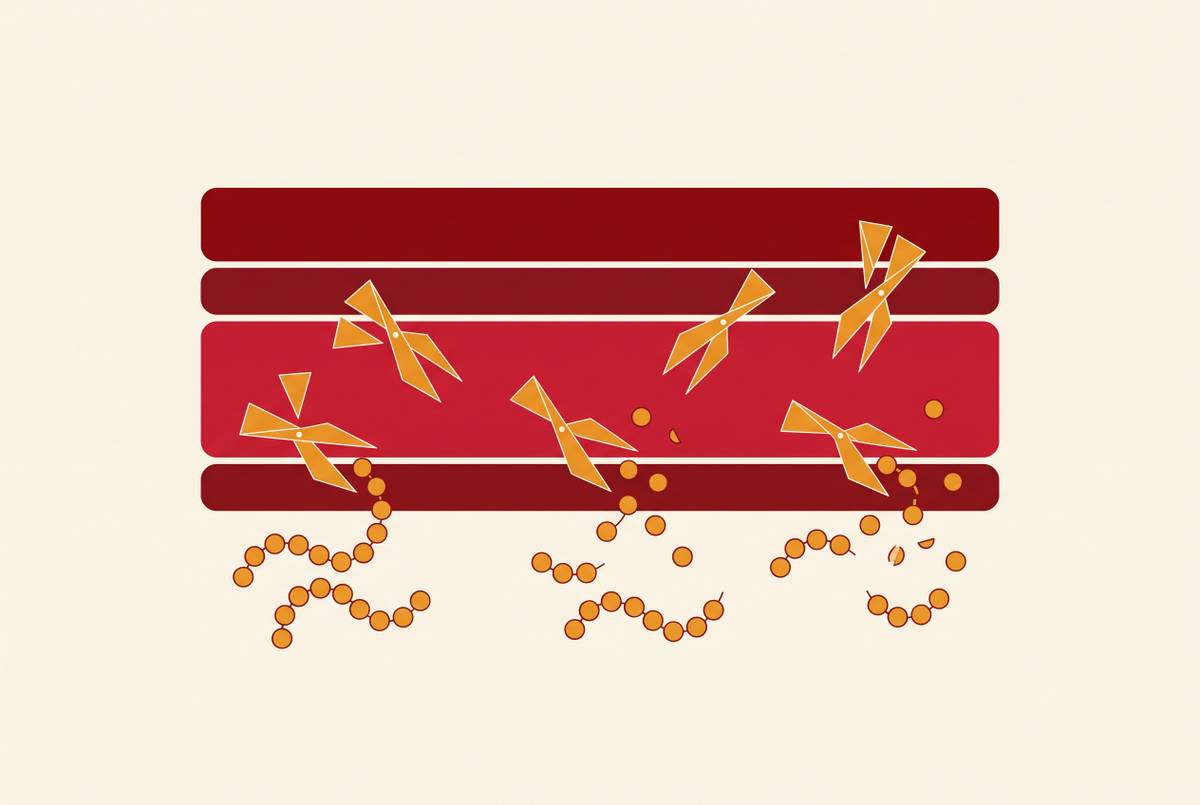
Stomach acid at pH 1–3 rapidly denatures peptides, digestive enzymes treat them like food, and their size and polarity make membrane crossing difficult. Survival alone is not enough for absorption. Small-molecule agonists avoid peptide fragility, although receptor activity can still produce the adverse effects associated with the GLP-1 class.
Oral semaglutide uses the SNAC excipient to protect the peptide and aid uptake. SNAC briefly raises local pH around the tablet, protecting semaglutide from pepsin degradation, while separately fluidizing the gastric membrane to improve transcellular absorption. Even then, bioavailability remains under one percent. Even so, OASIS-4 studied oral semaglutide 25 mg over 64 weeks in adults with obesity and found mean weight loss of 13.6%, along with metabolic changes for the better.
Low absorption therefore does not preclude clinically meaningful benefit. But oral semaglutide and orforglipron still have the gastrointestinal adverse events seen with the class, and weight loss in current oral results is lower than with injectables in pivotal trials. Could nausea be removed without weakening appetite suppression? One hypothesis holds that the nauseating and food-intake-reducing effects of GLP-1 receptor agonism are inextricably linked, making the problem more difficult than protecting a tablet from stomach acid.
The oral GLP-1 companies with programs in or near the clinic
Oral peptide semaglutide has already crossed the regulatory threshold. Rybelsus, at 3 mg / 7 mg / 14 mg, is FDA-approved for type 2 diabetes in adults. The 25 mg formulation for obesity, which has a higher dose and was studied in OASIS-4, got FDA approval in December 2025. For patients, strict timing and fasting rules remain an adherence consideration, replacing self-injection with a precise dosing protocol.
AstraZeneca is developing AZD5004, an oral small-molecule GLP-1 receptor agonist advancing into Phase III trials following positive Phase IIb results. Terns, Inc. evaluated TERN-601 in adults with overweight or obesity in a Phase 2 study that is now completed and discontinued. The Terns protocol, TERN601-2003, registered as NCT06854952, specifies efficacy, safety and tolerability as its focus. Its Amendment 2 is dated 04 June 2025.
The oral field therefore includes both marketed treatment and programs at different development stages. Its potential advantages extend beyond avoiding injections. Oral agents can simplify co-formulation with other medicines, reduce the need for prescribers to teach self-injection and potentially lower the cost of goods. Those benefits explain why oral development has value even when gastrointestinal effects persist.
What the nose-to-brain route offers that oral delivery structurally cannot
Intranasal delivery offers access to the brain through olfactory and trigeminal pathways, without requiring passage from systemic circulation across the blood-brain barrier. That is a different anatomical proposition from swallowing a drug. Preclinical models have shown rapid transport through trigeminal axons of neuropeptides, including GLP-1 and GLP-2 derivatives with functional sequences such as CPP/PAS conjugates. The evidence supports a route worth developing.
Preclinical research with a hematopoietic growth factor that crosses the blood-brain barrier poorly found intranasal administration 8–12 times more effective than subcutaneous application at achieving brain and cerebrospinal fluid concentrations. That result shows how nasal delivery could change which tissues a drug reaches in ways that oral reformulation cannot.
For GLP-1, the hypothesis is that preferential CNS delivery could engage satiety and reward circuits while reducing peripheral gastrointestinal exposure. Whether that reduces nausea without sacrificing benefit remains unproven in humans. Nasal barriers and peptide properties still complicate delivery, so anatomical access alone is insufficient. Nanocarriers provide the engineering bridge between a promising route and a usable formulation.
How nanoparticle engineering makes intranasal GLP-1 delivery viable
Unformulated nasal peptides face enzymatic degradation, rapid mucociliary clearance and poor membrane permeability. Moving from the stomach to the nose does not make peptide fragility disappear. Lipid nanoparticles, polymeric nanoparticles and layer-by-layer assembled coatings address these barriers by protecting cargo, extending its residence at the mucosal surface and facilitating uptake into olfactory and trigeminal nerve endings.
Mucoadhesive systems and cell permeation enhancers support different steps in that process. Mucoadhesion lengthens contact time, while permeation enhancers can open tight junctions or facilitate transcellular transport. Related peptide engineering also offers evidence of improved uptake. A 2025 animal study found that cell-penetrating peptide conjugation improved brain bioavailability by 2 to 10 fold compared with unconjugated peptides.
The platform is broader than one drug. A configurable nanoparticle system can accommodate different peptide payloads, extending its potential use across GLP-1 therapeutics, other peptide medicines and neurological indications requiring CNS access. Because the platform can serve more than one drug, foundational intellectual property in particle engineering, surface chemistry and mucosal interaction can have lasting value. Development requires selecting a peptide and controlling how its package interacts with the nasal surface.
Intranasal GLP-1 programs with named preclinical data
MetP Pharma announced preclinical evidence that its proprietary nasal technology achieves rapid, dose-dependent brain targeting of drugs, including semaglutide, with low systemic exposure. In its 2025 rat study, brain-to-plasma ratios were consistently greater than 1 after the rats were given intranasal semaglutide. That finding is an exposure result, not evidence of human weight loss or reduced nausea. MetP is looking into partnerships to take its brain-targeted programs through more preclinical and clinical development.
The broader landscape also includes approaches that are neither oral nor intranasal. Vivani Medical, based in California, is testing a long-term subdermal semaglutide implant through its NanoPortal platform, designed for continuous delivery over six to twelve months. Its preclinical work reported substantial sham-adjusted weight loss. Separately, the first-in-human LIBERATE-1 study met its primary safety and pharmacokinetic objectives, which should not be confused with the animal efficacy result.
These approaches address different delivery problems. An implant seeks prolonged exposure without repeated injections, while intranasal nanoparticle engineering seeks preferential CNS delivery with reduced peripheral exposure. The latter is a distinct development option rather than a variation on sustained release. Its credibility rests on the combination of anatomical rationale, formulation engineering and preclinical pharmacokinetics, with clinical validation still ahead.
Why neurological indications make the delivery route choice more consequential than it appears
GLP-1 receptors are present throughout the CNS, and injectable agonists cross the blood-brain barrier to some degree. In preclinical Alzheimer’s disease and Parkinson’s disease models, GLP-1 receptor agonists have reduced neuroinflammation, improved mitochondrial function and enhanced clearance of toxic proteins. Those changes have accompanied benefits in cognition and dopaminergic neuron survival. They establish a mechanistic rationale.
A large US Veterans Affairs cohort of people with type 2 diabetes associated GLP-1 medications with reduced rates of Alzheimer’s disease, with HR 0.88, and dementia, with HR 0.92. The cohort also showed associations with decreased risks of substance use disorders and seizures. Association is not proof of therapeutic benefit. Clinical evidence has not established improved memory and cognition in Alzheimer’s disease, and GLP-1 receptor agonists are not currently indicated for Alzheimer’s or Parkinson’s disease.
If neurological benefit depends on CNS receptor engagement, preferential brain exposure offers a way to test the hypothesis more directly than relying on peripheral circulation. The possibility of preferential brain exposure makes addiction and neurodegeneration distinct therapeutic opportunities, while leaving open whether intranasal delivery is necessary for any given neurological application.
How the two delivery paths compare across the tradeoffs that matter for patients and developers
On efficacy and development stage, the evidence is asymmetric. Oral agents have shown clinically meaningful weight loss, and both oral peptide and small-molecule options are now approved. Intranasal GLP-1 programs remain preclinical, with favorable CNS pharmacokinetics in animal models and no comparable human efficacy results.
On tolerability, removing the needle is not the same as solving nausea-driven non-compliance. Real-world data attribute up to 28% of GLP-1 medication stoppages to side effects, while oral agents retain the class gastrointestinal profile. Intranasal delivery aims to reduce peripheral exposure without losing CNS benefit. Whether it can achieve that separation in patients is the central unanswered question.
Oral agents do away with the need to manage injections and cold-chain logistics, though peptide formulations still have rules on timing and fasting. An intranasal product that has been validated could do away with those fasting rules and aim for brain concentrations that peripheral routes may be unable to reach at systemic doses patients can tolerate. Neither convenience nor favorable animal exposure establishes long-term adherence. Both paths have a place, because the best balance of burden, exposure and proven benefit may differ with the patient, the indication and the clinical setting.
What the delivery route landscape means for the future of GLP-1 therapeutics
New ways to deliver drugs are becoming a main way to compete as efficacy alone becomes less able to set treatments apart. Retatrutide, a triple GLP-1/GIP/glucagon agonist, produced Phase 3 weight loss approaching bariatric surgery benchmarks, yet greater potency does not by itself resolve dropout. Adoption also depends on tolerability, adherence, long-term safety, patient preference and payer coverage.
Preferential CNS delivery adds a further development question. There are scientific grounds to study brain-targeted GLP-1 activity for addiction, dementia and Parkinson’s disease, but that work still needs clinical validation. Nanoparticle platforms built on foundational intellectual property could support that work across multiple peptide payloads. Their prospective value lies in reaching people current delivery methods leave underserved, including those deterred by needles, those who stop because of nausea and those whose neurological conditions require more effective CNS access.
Sources
- A Clinical Study to Evaluate the Efficacy, Safety, and Tolerability of TERN-601 in Adults With Overweight or Obesity
- From needles to pills: oral GLP-1 therapy enters the obesity arena
- Intranasal delivery of glucagon-like peptide-1 to the brain for obesity treatment: opportunities and challenges: Expert Opinion on Drug Delivery: Vol 21, No 7