Biotech Companies Developing Nose-to-Brain Nanoparticle Platforms for CNS Indications
Nanoparticles engineered to bypass the blood-brain barrier through nasal delivery.

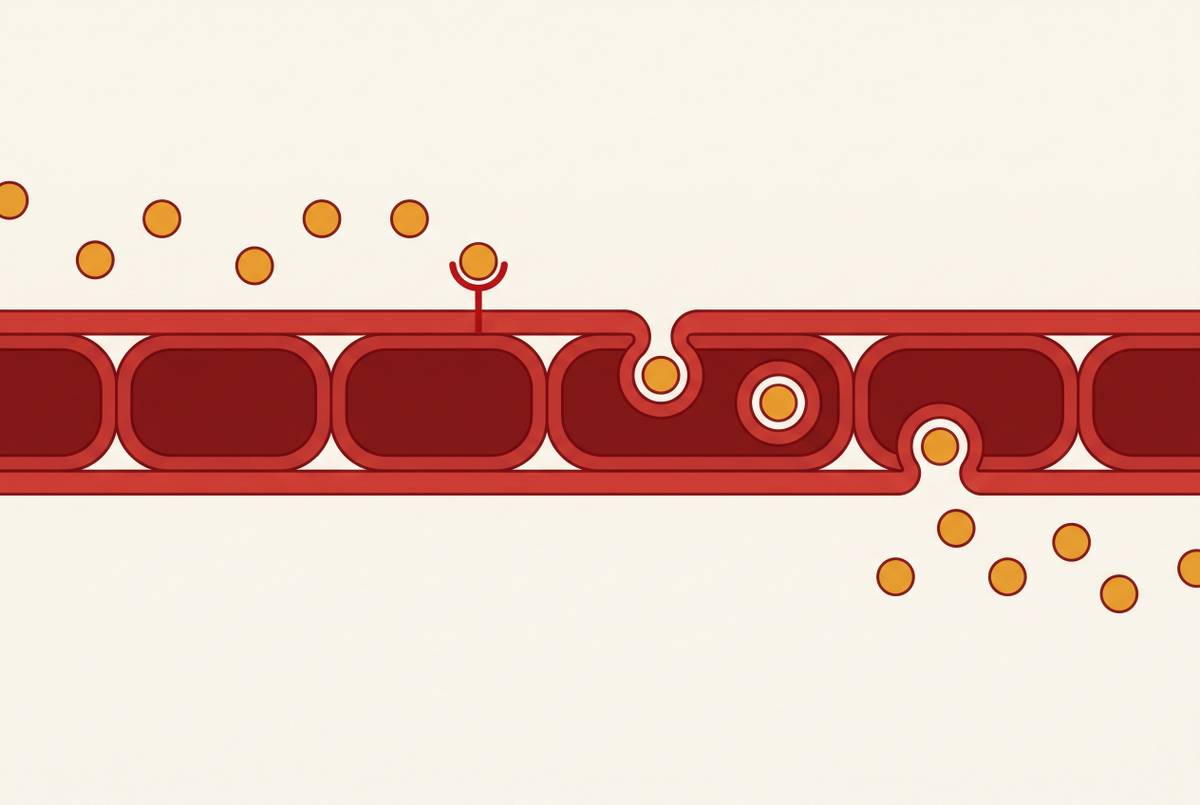
The blood-brain barrier blocks most drugs from reaching the brain by design, and that one fact shapes nearly every CNS drug program running today. The barrier is not one gate but a layered system of exclusion built from tightly joined endothelial cells, and it screens molecules by two separate rules. Cells are sealed tight, so a molecule can only pass through them, and that route admits almost nothing heavier than roughly 500 daltons unless it is highly lipid-soluble. Even the small number of compounds that clear this bar run into a second defense: pump proteins in a class of efflux transporters sit in the endothelial membrane and actively eject many of the molecules that do get in, sending them back out to the bloodstream before they reach brain tissue. Put the two mechanisms together: large-molecule biologics, therapeutic peptides, and RNA-based drugs, the exact classes generating the most excitement in neurodegeneration and psychiatric research, are the ones conventional intravenous or oral delivery locks out most completely. The rest of this piece follows the industry's attempt to engineer a path around that wall.
Nasal bypass of the BBB through olfactory and trigeminal pathways
The nasal cavity offers something the bloodstream cannot: two sets of nerves that run straight from the nose into the brain without ever touching the barrier described above. The olfactory nerve carries sensory fibers directly from the nasal epithelium into the olfactory bulb, and the trigeminal nerve sends branches through the nasal mucosa toward the brainstem, giving drug formulators a second axonal conduit alongside the first. Research published in the International Journal of Nanomedicine found that nasal administration allows direct and rapid transport into the brain while keeping systemic exposure markedly lower than intravenous or subcutaneous dosing achieves. The appeal goes beyond pharmacokinetics: the route is non-invasive, and a patient can in principle administer a dose without a clinic visit or a needle, a practical advantage that matters enormously for chronic neurological conditions requiring repeat dosing.
That promise runs into real anatomical limits. A paper in Nanoscale points out that the olfactory epithelium occupies a limited surface area in the human nose, far smaller proportionally than in the rodents most nose-to-brain research has historically relied on, and that mucociliary clearance continuously sweeps material off that surface and toward the throat. A drug molecule sitting in the nasal cavity has a narrow window, both in space and in time, before the body moves it along. Those two constraints, a small target area and a short residence time, function as the design brief for everything described in the following two sections: without a way to hold a payload at the olfactory and trigeminal surfaces long enough to be absorbed, the anatomical shortcut yields very little.
Why bare drug molecules fail at the nasal mucosa
A peptide drug handed to the nasal cavity unprotected faces three things working against it almost immediately. Nasal mucosa carries its own proteolytic enzymes, and Nanoscale's 2026 review notes these enzymes begin breaking down peptide drugs before meaningful absorption can occur. Mucociliary clearance, already identified as a structural constraint on the route itself, acts on a timescale of minutes, so a free molecule deposited in the nasal cavity is often cleared before it can cross into olfactory or trigeminal tissue. And even a molecule that survives both of those threats still has to get through mucus itself, a viscoelastic gel that the same Nanoscale review describes as demanding one of two opposing strategies: either the drug clings to the mucus layer long enough to permeate, or it moves through the mucus quickly before clearance carries it away. These are foundational constraints that explain the reason unformulated nasal sprays have such a poor track record delivering large molecules to the brain, no matter how direct the olfactory and trigeminal shortcuts appear on paper.
Nanoparticle carriers answer all three problems at once; they do not just trade one for another. A payload encased in a nanoparticle shell is physically shielded from the enzymes that would otherwise degrade it. The particle's surface can be engineered to extend contact time with the nasal mucosa through mucoadhesion, or to slip through the mucus layer quickly through mucopenetration, buying the time or the speed needed to reach olfactory neurons intact. And the same surface engineering that manages the mucus barrier can also promote uptake into the neurons themselves, moving the payload along the axonal pathways into brain tissue. The International Journal of Nanomedicine's 2026 review frames this as the central argument for the whole field: intranasal delivery solves the blood-brain barrier obstacle, but it creates a formulation challenge of its own, and nanoparticle engineering is what resolves that formulation challenge. This is the hinge the rest of the article turns on. Without it, "intranasal" and "nose-to-brain" would be describing a route with no reliable way to use it for anything bigger than a small, well-absorbed molecule like a triptan.
Nanoparticle size, surface charge, and material composition in brain-targeting performance
Three design variables determine how well a nanoparticle performs this job: how big it is, what charge sits on its surface, and what material it is built from. Each affects a different stage of the journey from nasal cavity to brain tissue, and developers tune all three together.
Size governs how a particle interacts with the epithelial surface it needs to cross, though the data here carry a useful caution against overstatement. A 2015 study in Molecular Pharmaceutics, using excised porcine olfactory epithelium, directly compared nanoparticle transport across different sizes and surface types. None of the nanoparticle systems tested were actually transported across the epithelium in that model, though particle size did measurably affect how much the particles associated with the tissue and how much epithelial damage resulted. The finding matters precisely because it complicates easy claims about nanoparticle transport: size clearly shapes tissue interaction, but transport across the olfactory epithelium is not guaranteed just because a particle is small. So what should you take from a negative transport result in an ex vivo porcine model? At minimum, the industry's optimism about nose-to-brain nanoparticles rests on evidence that is still being built, model by model.
Surface charge shapes how a particle behaves once it meets mucus, and this is where mucoadhesive and mucopenetrating strategies diverge as genuinely different engineering choices. A mucoadhesive particle is built to bind the mucus layer and stay put, so it trades mobility for residence time. A mucopenetrating particle instead carries a low-friction surface coating, commonly polyethylene glycol (PEG), that lets it slide through the mucus mesh before clearance removes it. Nanoscale's 2026 review treats these as suited to different payloads and different delivery goals rather than one being simply superior: a formulation meant to release a drug slowly over the course of contact with the epithelium favors mucoadhesion, while one that needs to reach the epithelial surface before a short clearance window closes favors mucopenetration.
A given charge and size strategy only works if the material allows it, and two material classes dominate current development. Chitosan-based polymeric nanoparticles carry a naturally positive surface charge, and that cationic character lets them interact electrostatically with the negatively charged nasal mucosa, improving both mucoadhesion and drug permeation according to reviews in ACS Biomaterials Science & Engineering and the International Journal of Nanomedicine, both published in 2026. Chitosan also physically shields encapsulated peptides from the enzymatic degradation described earlier, addressing two of the mucosal barrier's three problems with a single material choice. Lipid-based nanocarriers, including liposomes and solid lipid nanoparticles, take a different approach: they are highly biocompatible and can carry both water-soluble and fat-soluble drug payloads inside the same particle. The International Journal of Nanomedicine's review finds that PEG surface modification is critical to getting these lipid carriers distributed through brain tissue once they arrive, tying the material choice back to the mucopenetration strategy described above. Neither material is a universal answer. Which one a developer chooses depends on the payload's chemistry and on whether the target indication rewards slow, sustained release or fast, high-concentration delivery.
CNS indications targeted by nanoparticle nose-to-brain platforms
Developers are not pursuing nose-to-brain nanoparticles as a general-purpose delivery upgrade. Each indication under active development responds to a specific failure of existing systemic treatment, and the pattern is worth working through indication by indication.
Alzheimer's disease and neurodegeneration more broadly represent the field's proof-of-concept case, built largely around intranasal insulin. Insulin delivered through the nose serves as a model system for peptide delivery to the brain generally, and the preclinical case for it rests on nonhuman primate PET imaging using an Aptar Pharma CPS Intranasal Delivery Device, presented at CTAD 2024, which showed radiolabeled insulin distributed throughout the brain following intranasal dosing. The Nanoscale 2026 review's translational insights section states that a related clinical study tied to this program is expected to finish in December 2027.
GLP-1 receptor agonists draw the most commercial attention in this space, and the biology behind them explains why. GLP-1 receptors sit throughout the brain, not just in the metabolic circuits most associated with these drugs, and the International Journal of Nanomedicine's 2026 review describes resulting effects that reach well beyond appetite regulation: neuroprotection, modulation of neuroinflammation, and signaling within reward circuits. A subcutaneously injected GLP-1 agonist has to cross the blood-brain barrier to produce any of those CNS effects, and reaching adequate brain concentrations that way requires systemic plasma levels high enough to trigger dose-limiting gastrointestinal side effects. That tradeoff caps how much CNS benefit a systemic injection can deliver before the side-effect burden becomes intolerable. Nose-to-brain delivery is engineered specifically around that constraint: the goal is preferential exposure in the brain while plasma levels stay low, which would reduce the GI burden and open a wider dosing range for neurological uses that systemic injection cannot safely reach.
Traumatic brain injury has its own dedicated federal research effort. The U.S. Department of Veterans Affairs is funding a project titled "Improving cognition in the chronic phase of traumatic brain injury with nanoparticles for nose-to-brain drug delivery," led by Principal Investigator Robert M. Gower, running from April 2024 through March 2026. A government-funded program targeting chronic-phase cognitive recovery signals that the nose-to-brain approach is being taken seriously beyond industry, in a condition where no systemic drug has solved the problem of restoring cognitive function months or years after the initial injury.
Pain and migraine offer the field something rarer than preclinical promise: an actual regulatory and clinical track record. The ACS Biomaterials Science & Engineering 2026 review describes a completed clinical trial of intranasal sumatriptan delivered through a dedicated device that showed faster onset than oral dosing, with significant reductions in migraine pain intensity and migraine-related disability appearing as early as 10 minutes post-dose. That is not a nanoparticle result; it establishes something more foundational: that intranasal CNS delivery can clear clinical trials and reach patients, which gives nanoparticle-based programs a working precedent to point to rather than an entirely unproven regulatory path.
Addiction and reward-circuit disorders round out the current indication list, and they follow directly from the same GLP-1 receptor biology. Because GLP-1 signaling reaches reward circuits in the brain, the International Journal of Nanomedicine's review positions nose-to-brain GLP-1 delivery as a candidate approach for addiction treatment, an application that depends entirely on the CNS-selective exposure nanoparticle engineering is meant to provide, not on the metabolic effects GLP-1 drugs are already approved for.
Preclinical data and early programs in nose-to-brain nanoparticle performance
Preclinical data now offer something the anatomy and the engineering logic alone could not: direct measurement of brain exposure after intranasal nanoparticle dosing, in numbers that systemic injection cannot match. A company based in Switzerland announced results in 2026 from a 2025 preclinical study: its proprietary nasal technology achieves rapid, dose-dependent brain targeting of a class of metabolic drugs while it keeps systemic exposure low. In rat studies, intranasal administration of semaglutide using the company's technology produced brain-to-plasma ratios that stayed consistently above 1, and the company says this confirms preferential delivery to the central nervous system. Brain exposure rose in proportion to dose and showed up quickly after administration, so you get exactly the dose-response relationship a developer needs to see before moving a program toward human dosing.
Landmark Medicines Ltd., based in the UK, announced in September 2026 that it will advance its own proprietary nasal delivery platform into a human volunteer study, and it picked GLP-1 receptor agonists as the first therapeutic application. The company pointed to the same olfactory and trigeminal pathway access described earlier in this piece as the mechanistic basis for the approach, a sign that the anatomical argument made in the second section of this piece is driving actual development decisions.
The intranasal insulin program tied to Alzheimer's research has produced the most clinically advanced data in the group. Beyond the nonhuman primate PET imaging already described, a subsequent first-in-human PET study found greater brain uptake of radiolabeled insulin in cognitively normal participants compared to participants with mild cognitive impairment, reported at CTAD 2024. That difference raises a question the current evidence cannot yet settle: does declining uptake track the disease process itself, or does it reflect some other physiological change in the aging or impaired brain? The associated clinical study has a completion date expected in December 2027. A clearer answer, one way or another, is still a few years out.
Taken together, these programs show a field that is still building its evidence base, not one reporting settled results. The porcine epithelium data from the sizing section stand as a reminder that transport across the olfactory barrier has not been demonstrated the same way for every nanoparticle system, even as the GLP-1 brain-to-plasma data and the insulin PET imaging show what successful preferential CNS delivery looks like when a platform gets the formulation right. One result is cautionary and the others are promising, and that distance between them is where nose-to-brain nanoparticle development currently stands.
Sources
- Chitosan-Based Nanoparticles for Nose-to-Brain Drug Delivery: A Real Path toward Effective CNS Therapy? - PMC
- Intranasal Nano-Delivery Systems: Emerging Strategies for Central Nervous System Disease Therapeutics - PMC
- Nose-to-Brain Delivery: Investigation of the Transport of Nanoparticles with Different Surface Characteristics and Sizes in Excised Porcine Olfactory Epithelium
- Overcoming barriers: nanomedicine-based strategies for nose-to-brain delivery - Nanoscale (RSC Publishing) DOI:10.1039/D5NR02259B
- Frontiers
- Full article: Intranasal Nano-Delivery Systems: Emerging Strategies for Central Nervous System Disease Therapeutics