Focused Ultrasound for Transient Blood-Brain Barrier Opening
Ultrasound and microbubbles open the brain to drugs without invasive surgery.
No other field of drug development has made less progress than neurological medicine, and the blood-brain barrier is why. It is not an obstacle that trips up a handful of poorly designed compounds. It structurally excludes the vast majority of candidate CNS therapeutics before they ever reach the tissue they're meant to treat, which makes it the central bottleneck sitting under nearly every unmet need in brain disease, from glioblastoma to Alzheimer's to Parkinson's.
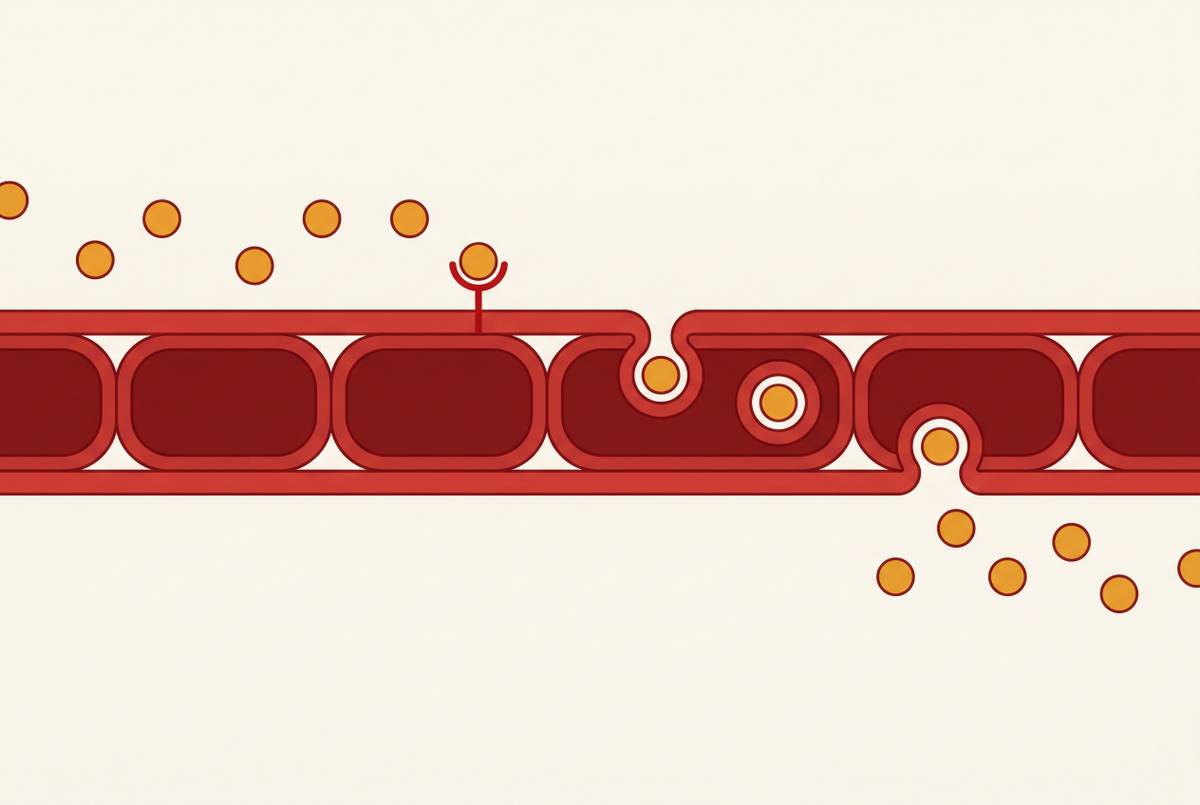
Endothelial cells sealed by tight junctions build the barrier, and supporting cells and active transport systems back them up, so together they decide almost everything about what gets into brain tissue and what doesn't. Small molecules mostly fail to cross in meaningful amounts. Large molecules, antibodies, gene vectors, peptide biologics, are shut out almost entirely under normal conditions. And for the rare molecules that do slip through, the barrier has a second line of defense: ATP-binding cassette transporters, a family of efflux pumps that grab substrates that made it across and push them straight back into the bloodstream. A drug can solve its diffusion problem and still lose to its efflux problem.
This creates a dead end that appears in every dose-response curve for CNS drugs. Raising the systemic dose to force more of a drug past the barrier pushes up side effects and cost without reliably raising the amount that actually reaches the brain. That ceiling applies across drug classes, not to one chemical family or disease. A review in the Journal of Molecular Pathology notes that the workarounds that have existed for years, pumping up viral vector titers, injecting directly into the brain parenchyma or the cerebrospinal fluid, carry real procedural risk, poor diffusion away from the injection site, and dose-dependent toxicity. None of that counts as a solved problem. It counts as a set of costly compromises that exist because nothing better has displaced them, which is exactly the gap a noninvasive, reversible, spatially targeted method of opening the barrier would need to fill.
Focused ultrasound and microbubbles opening the barrier without cutting into the brain
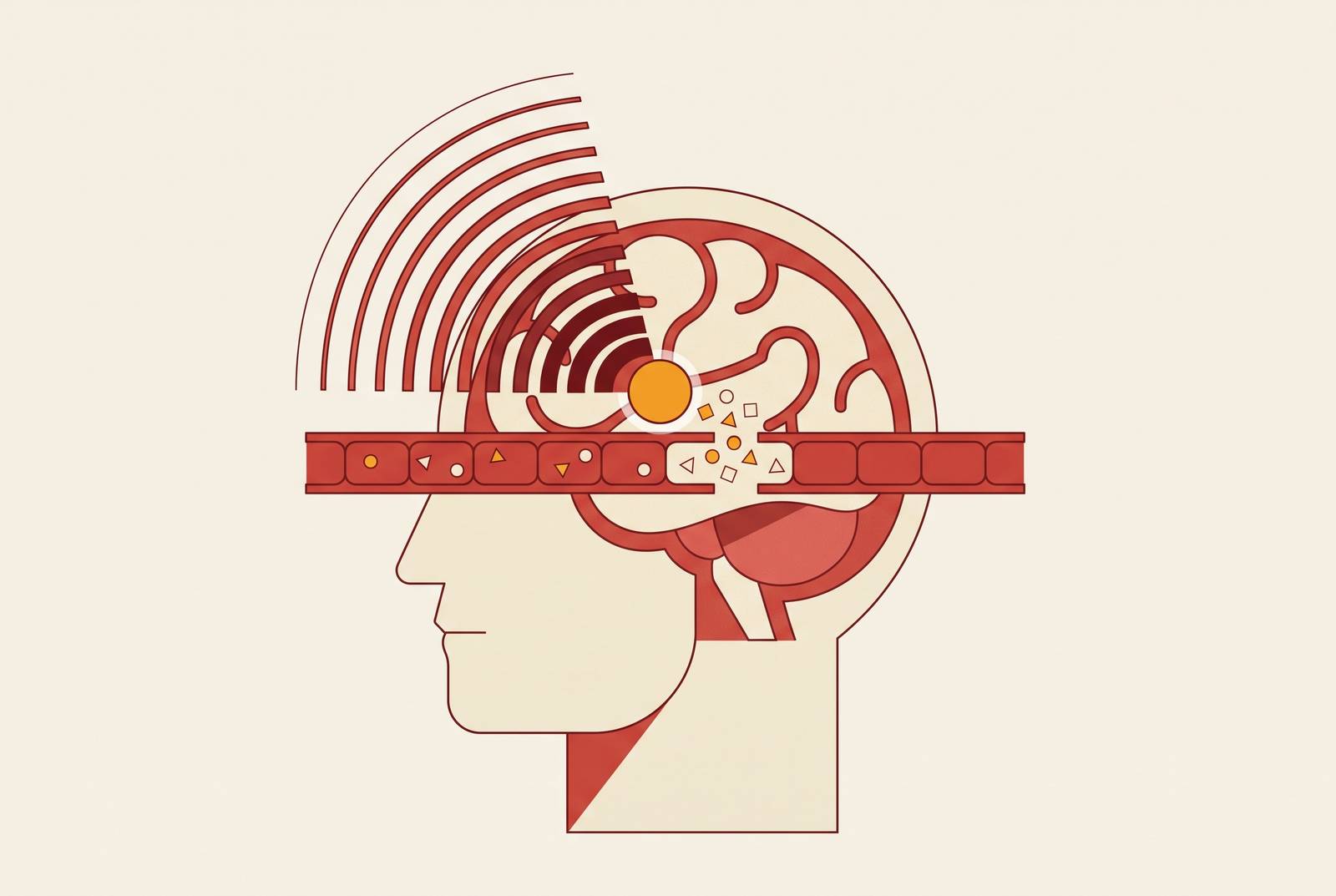
Focused ultrasound combined with microbubbles opens the blood-brain barrier through force, not chemistry. Microbubbles are gas-filled lipid spheres, already circulating harmlessly in the bloodstream, that expand and contract when an ultrasound field passes through them. That oscillation pushes against the vessel wall from the inside, and the mechanical stress it creates on the endothelial lining and the tight junctions is enough to pull those junctions apart temporarily, carving open gaps large enough for drug molecules to pass into the brain tissue beyond the vessel.
What makes this approach different from a craniotomy or an intrathecal injection is where the control lives. MRI guidance steers the ultrasound beam to a defined target inside the skull, so even if microbubbles circulate everywhere in the body, the barrier opens only where the acoustic energy is actually focused. Everywhere else, the vasculature stays shut. An explainer from UNC's MedRaC cites a preprint using single-cell analysis that found, at safe pressures, this opening comes from a transient reorganization and repair process in the endothelial tight junctions rather than outright destruction of them, with barrier function returning within roughly a day under those safe parameters.
But the same preprint found something less comfortable on the other side of that safety line. At high, unsafe pressures, the junctions don't reorganize, they get obliterated, and they can stay unrepaired even 72 hours later, letting fibrinogen leak through and triggering persistent microglial activation. That split describes the field's central safety boundary: stable cavitation, where the microbubbles oscillate in a controlled rhythm, against inertial cavitation, where they collapse violently and tear tissue. Everything that makes FUS-BBBO viable as a clinical tool depends on staying on the stable side of that line, and how engineers manage to do that is the subject the next section takes up.
Acoustic parameters that determine whether the opening is therapeutic or damaging
Stable cavitation and inertial cavitation come from the same physics, tuned differently. Frequency, pressure amplitude, and pulse timing together decide which one a given treatment produces, and small miscalculations in any of the three can turn a therapeutic opening into a hemorrhagic one.
Frequency sets how deep the ultrasound can reach and how much room exists between an effective pressure and a dangerous one. Lower frequencies, up to roughly 250 kHz, penetrate deeper into brain tissue, which matters for reaching structures like the putamen or deep white matter tracts. But that depth comes at a cost: the margin between the pressure needed to open the barrier and the pressure that causes hemorrhage narrows sharply at those lower frequencies. Around 0.15 MPa, hemorrhage becomes a risk at the low end of the frequency range, so clinicians end up working inside a genuinely narrow target window.
Pulse timing governs a different variable: how long the opening lasts once it's made. Moderate parameters hold the barrier open for several hours, so a drug circulating in the blood has time to diffuse across before the junctions reseal. The Journal of Molecular Pathology review notes that more aggressive parameters stretch that window considerably longer, so you trade a longer delivery opportunity for a longer period where the brain sits exposed. None of this is managed by setting a dial once and walking away. Real-time cavitation monitoring reads the acoustic signatures microbubbles emit as they oscillate, distinguishes the spectral signature of stable cavitation from the signature of an inertial collapse, and feeds that reading back into the system so it can adjust output pressure on the fly to stay inside the safe regime. That feedback loop is why repeated sessions have held up across trials: bilateral frontal BBB opening carried out three times at two-month intervals produced no acute adverse events, according to the Focused Ultrasound Foundation's report on Jin Woo Chang's Alzheimer's trial, and safety has now been observed across many separate treatments spanning months.
What glioblastoma trials have established about FUS-BBBO's clinical reality
Glioblastoma is where FUS-BBBO has moved furthest past proof-of-concept into measured clinical outcomes, and the BT008NA trial is the result the rest of the field now points to. It is the first study to report a likely survival benefit tied to the technique, and that finding starts to reposition focused ultrasound from a delivery aid riding alongside chemotherapy into something closer to a therapeutic factor on its own.
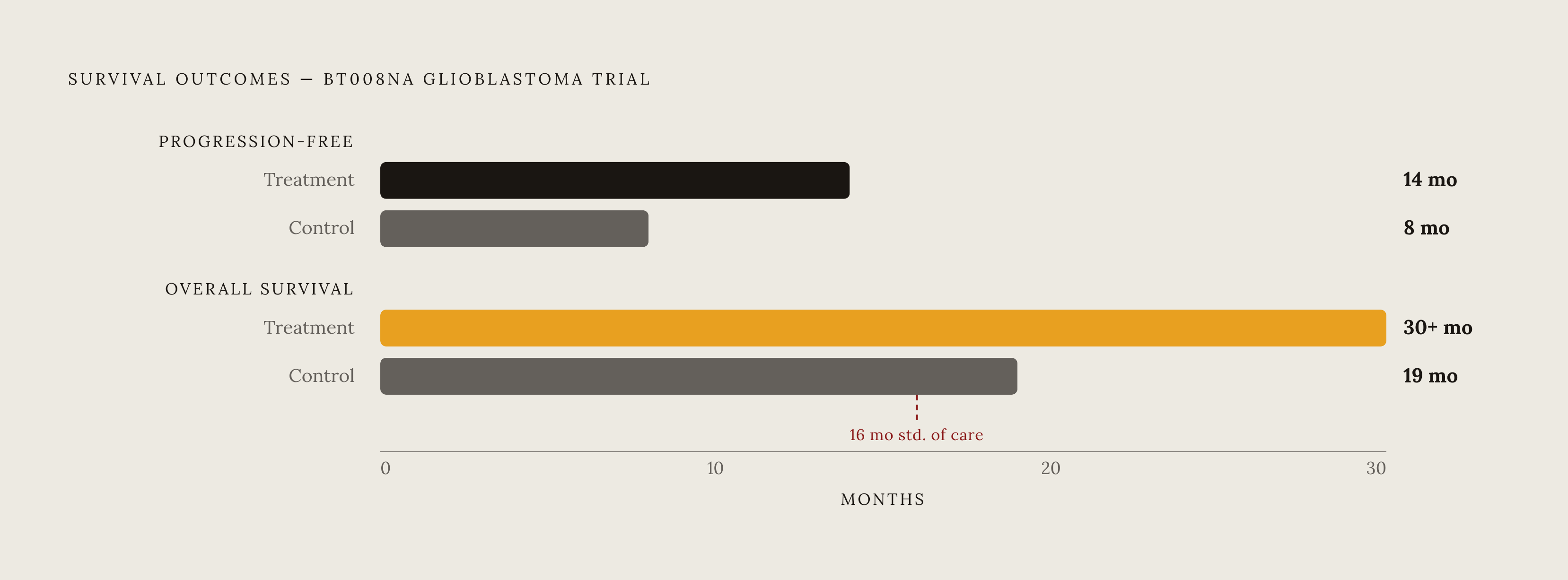
The design was straightforward in structure, exacting in execution. A cohort of newly diagnosed glioblastoma patients received, on designated days within each 28-day chemotherapy cycle, blood-brain barrier opening using Insightec's Exablate Neuro low-intensity focused ultrasound system paired with intravenously delivered Definity microbubbles, immediately ahead of standard-of-care temozolomide. The results, reported in Lancet Oncology and summarized by the University of Maryland School of Medicine, showed median progression-free survival of nearly 14 months against 8 months in matched controls, and overall survival beyond 30 months against 19 months. Glioblastoma's typical prognosis under current standard of care is around 16 months of average survival. A gap of that size, in a disease that has resisted meaningful survival gains for years, is the kind of signal that justifies calling this a possible survival benefit rather than a confirmed one, and the careful phrasing matters: confirmation trials are still what stands between this result and a settled claim.
A second finding out of the same trial may end up mattering just as much over time. Opening the barrier let tumor-derived DNA biomarkers, which normally can't exit the brain at all, show up in plasma liquid biopsy, and the levels tracked closely with both progression-free and overall survival. That gives oncologists a noninvasive way to watch a glioblastoma patient's status change in real time, something the field has lacked.
The next test of the approach is moving toward children. The FIDES trial, sponsored by UMC Utrecht with the Princess Maxima Center for Pediatric Oncology as a collaborating site (NCT07562971), carries an estimated May 2026 start date, though it had not yet begun recruiting as of its registration posting, and targets pontine diffuse midline glioma with completion projected for 2031. The Focused Ultrasound Foundation reports that it follows an earlier pediatric study that performed 26 procedures across three patients, all of it done outpatient and without sedation, with MRI confirming BBB opening in all three. That a procedure once imagined as requiring general anesthesia and inpatient monitoring can now be done outpatient, awake, in children, says something about how far the engineering has matured since the earliest feasibility work.
Alzheimer's and Parkinson's trials testing FUS-BBBO in neurodegeneration
Oncology gave FUS-BBBO its first survival data. Neurodegeneration is where the technique is being tested against a different, quieter question: does opening the barrier actually get more drug where it needs to go, and does that drug do anything once it's there? Safety has been demonstrated clearly in Alzheimer's and Parkinson's patients, and some of the early biological signals look genuinely encouraging, but no one has yet run the controlled trials needed to show that FUS-BBBO meaningfully improves drug delivery in these diseases.
The clearest Alzheimer's data come from Jin Woo Chang, MD, PhD, at Korea University Anam Hospital. In trial NCT06158789, run between 2022 and 2023, six participants underwent bilateral frontal BBB opening three separate times at two-month intervals, using Definity microbubbles with the Exablate Neuro 220 kHz system. Not one of the six had a single acute treatment-related adverse event. The opening volume averaged 43.1 cubic centimeters, more than double what Chang's earlier trial achieved and larger than any prior clinical study at that point, meaning substantially more amyloid-burdened tissue was exposed to the intervention than in earlier work. The Focused Ultrasound Foundation reports that four of the six participants showed decreased amyloid plaques, and five of six showed neuropsychiatric improvement as measured by the CGA-NPI score. Preclinical work gives a mechanistic reason to expect this kind of result: anti-amyloid antibodies delivered under FUS achieved five-fold to eight-fold better penetration than the same antibodies given systemically without barrier opening. West Virginia University's Rockefeller Neuroscience Institute is now pairing FUS-BBBO with lecanemab, an approved anti-amyloid antibody, after aducanumab was pulled from the market for financial and business reasons unrelated to safety, as Biogen reprioritized its resources elsewhere.
Parkinson's research is earlier along but points the same direction. In one clinical trial, focused ultrasound went biweekly to the putamen, and BBB permeability rose every time, confirmed by elevated MRI signal in the targeted region against the untreated side of the same brain.
None of that answers the harder question. The 2026 Journal of Molecular Pathology review is blunt about where the evidence actually stands: small-cohort studies have shown safe BBB opening in patients with Alzheimer's, Parkinson's, and ALS, but improved drug delivery has not yet been demonstrated in humans with the rigor of a controlled efficacy trial. Safety is established. Therapeutic delivery would justify calling this a treatment rather than a safe procedure, and it is still being built out one trial at a time.
Why nanoparticles and gene vectors multiply FUS-BBBO's therapeutic range
Glioblastoma and Alzheimer's are the diseases where FUS-BBBO has clinical data behind it, but the technique's largest long-term value may lie somewhere else entirely: as the delivery gateway for an entire category of molecules that cannot cross an intact blood-brain barrier under any circumstances, at any dose. That reframes it from a chemotherapy enhancer into a platform that the whole CNS large-molecule pipeline depends on.
Preclinical work in rodent models of Alzheimer's and Parkinson's has already used FUS-BBBO to deliver growth factors, antibodies, genes, viral vectors, and nanoparticles, and the 2026 Journal of Molecular Pathology review confirms enhanced CNS penetration specifically for chemotherapeutic agents, therapeutic peptides, monoclonal antibodies, and nanoparticles. Lipid nanoparticles carrying mRNA or CRISPR gene-editing machinery are a particularly interesting case: they can carry more cargo than viral vectors and provoke a weaker immune response, which matters for any treatment that needs to be given more than once, but they're blocked by the BBB just as completely as any other large molecule. So FUS-mediated opening gives them a route in through ordinary systemic administration.
The move toward nanobubbles, which are smaller than the microbubbles used in current trials, is a refinement worth tracking. Because they're smaller, they can pass through narrower cerebral capillaries and may spread more evenly through brain vasculature; they can also oscillate more stably at higher acoustic frequencies, and that may lower the pressure threshold needed to open the barrier and cut down on off-target effects elsewhere in the vessel wall.
Getting cargo to the FUS target in the first place is its own problem. Nanoparticles given systemically get recognized and cleared fast by the mononuclear phagocyte system, piling up in the liver and spleen before they ever reach the brain's vasculature. PEGylated lipid coatings reduce that immune recognition and extend how long the particles stay in circulation, which leaves more of the dose still available in the bloodstream at the moment the FUS window actually opens.
The same delivery problem extends to peptide biologics, including GLP-1 receptor agonists and other large peptides that cannot cross an intact barrier regardless of dose. The neurological roles tied to GLP-1 biology, neuroprotection, dopamine modulation, addiction circuits, and the metabolic dysfunction linked to dementia, are exactly the kind of CNS targets that would benefit from a method of delivery that is spatially controlled and fully reversible.
What remains unresolved
The honest accounting of FUS-BBBO has to hold two things at once: the method is reversible, spatially precise, and increasingly well-managed at the level of acoustic physics, and it is still a young clinical technology with more open questions than closed ones. Glioblastoma has a likely survival benefit from one trial. Alzheimer's has clean safety data and encouraging biological signals, but the cohort is only six people. Parkinson's has confirmed permeability changes without yet showing what that permeability does for a delivered drug. None of those statements yet rises to confirmed, repeated, large-cohort efficacy.
What would change that? Larger controlled trials that measure drug concentration in brain tissue or cerebrospinal fluid directly, rather than inferring delivery from downstream clinical signals, would show whether the drug actually reaches target tissue in sufficient amounts, which the 2026 Journal of Molecular Pathology review says remains unconfirmed in Alzheimer's, Parkinson's, and ALS. Confirmation of the BT008NA survival result in a larger, randomized cohort would turn a possible benefit into an established one. If you put together the safety data across Chang's repeated Alzheimer's sessions, the pediatric glioma procedures done without sedation, and the Parkinson's putamen trials, you still need longer time horizons and larger patient populations before you can call the safety profile fully settled.
What the technique has already earned is a serious claim to attention: a way of opening the brain's most stubborn barrier without a scalpel, with a window of access that closes itself within a day, aimed with enough precision that the rest of the brain never feels it. The next several years of trials will decide how far that opening can be pushed.
Sources
- Glioblastoma Clinical Trial: Focused Ultrasound Blood-Brain Barrier Opening is Safe, Provides Possible Survival Benefit - Focused Ultrasound Foundation
- Opening the Barrier: Focused Ultrasound for Improved Brain Drug Delivery
- Optimization of Focused Ultrasound-Mediated Blood–Brain Barrier Opening for CNS Therapeutic Delivery: Mechanistic Insights, Technical Parameters, and Clinical Translation
- Alzheimer’s Disease: New Focused Ultrasound Clinical Trial Shows Safety and Potential Clinical Benefits - Focused Ultrasound Foundation
- Clinical Trial Using Focused Ultrasound with Chemotherapy Finds Potential Survival Benefit for Brain Cancer Patients - News
- Focused Ultrasound Blood-Brain Barrier Opening in Pontine Diffuse Midline Glioma to Enhance Temozolomide Therapy: Pilot Feasibility Study (FIDES)
- Safe focused ultrasound-mediated blood-brain barrier opening is driven primarily by transient reorganization of tight junctions