Higher-Order Structure Characterization of Therapeutic Peptides
Peptides need their own structural analysis toolkit to ensure they fold correctly and work as drugs.
Peptide drugs sit in a strange middle ground: too complex to treat like small molecules, too small to treat like full biologics. That in-between status has real consequences. The tools and assumptions built for one class don't map onto the other, and getting the mapping wrong causes failed batches, immune reactions, or drugs that quietly stop working the way they did in the lab.
The structure problem in therapeutic peptides
Peptides are short biopolymers, chains of amino acids shorter than a full protein but long enough to fold into shapes that matter. These functions appear throughout human biology, including cell signaling, neurotransmission, and immune response. What makes them useful as drugs is what makes them hard to pin down. Their conformational range stretches from almost no fixed shape at all to something as tightly folded as a small protein.
Regulators have wrestled with where to place peptides for years, and neither existing framework actually fits. Small-molecule drugs are defined, fully and finally, by chemical structure: match the structure, and the drug is matched. Large biologics sit at the other extreme, requiring full comparability studies because their behavior depends on far more than the covalent bonds holding them together. Peptides fall in the gap between those two regimes. Treating that gap as a minor classification quirk is the mistake that causes downstream trouble, because a peptide's function depends not just on its sequence but on secondary, tertiary, and sometimes quaternary arrangement. The same string of amino acids can behave in entirely different ways depending on how it happens to fold.
That complexity is also the draw. Peptides hit their targets with a precision small molecules can't match, carry strong bioactivity at low doses, and generally cause less off-target toxicity and less immunogenicity than full antibodies. Many can dock onto the broad, shallow protein-protein interaction surfaces that small molecules simply can't grip. High specificity paired with a manageable size is why peptide pipelines have grown as fast as they have.
Most programs get it wrong when they borrow small-molecule characterization playbooks wholesale and call the job done. The industry doesn't get to keep the speed of small-molecule development and skip the structural rigor that biologics demand. Something in between has to be built, purpose-built for peptides specifically, and most programs still underinvest in that middle ground. That underinvestment is the single most predictable cause of late-stage surprises in peptide development. It is the single most predictable cause of late-stage surprises in peptide development.
Why higher-order structure is inseparable from biological activity
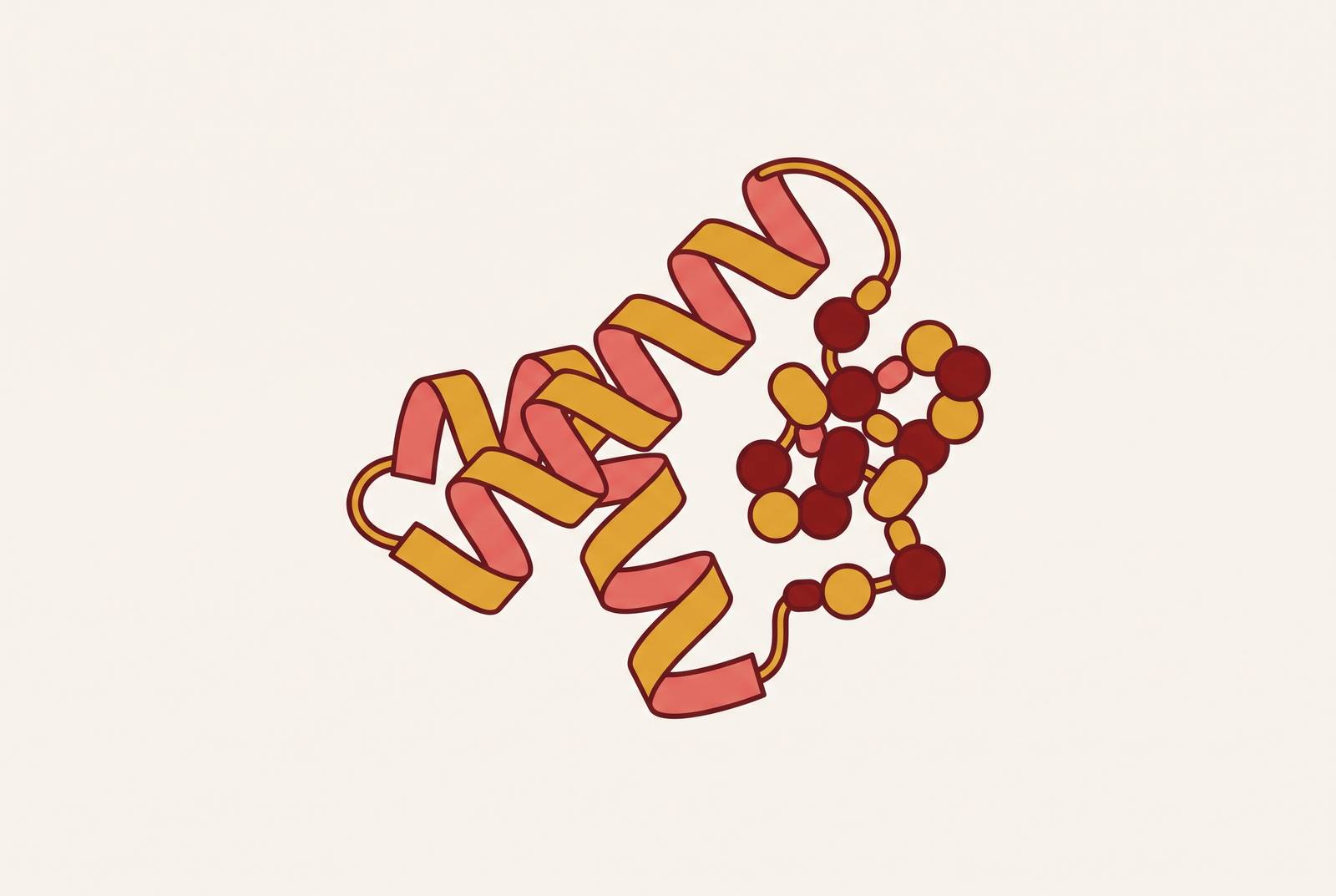
Higher-order structure, HOS for short, describes how a peptide arranges itself in three-dimensional space: local folding patterns (secondary structure), the overall shape that folding produces (tertiary structure), and, for peptides that assemble into multi-unit complexes, how those units come together (quaternary structure). HOS, once you get past the sequence of letters, is just the shape of the molecule.
Correct HOS is the basic condition for the drug to work, not a quality nicety layered on top of a working drug. It is the basic condition for the drug to work. A peptide can carry the exact right amino acid sequence and still fail completely if it folds wrong, because the biological target it's supposed to bind usually recognizes shape, not sequence in isolation. When HOS gets disrupted, whether by heat, pH, mechanical stress, or plain time on a shelf, the effects ripple outward: quality drops, stability suffers, safety and efficacy both take a hit. Misfolded or partially unfolded peptides raise the risk of an immune response and often lose the biological activity they were designed to have.
Peptides diverge sharply from large proteins here, and that divergence is where a lot of characterization work gets genuinely hard. Big proteins tend to hold a fairly stable, well-defined fold most of the time. Many peptides don't. They carry comparatively little fixed secondary or tertiary structure to begin with, and their conformation shifts, sometimes dramatically, when they bind a receptor, embed in a lipid membrane, or just experience a change in temperature or solvent. That flexibility is often part of how the molecule works.
So what shape is this peptide, really? The question doesn't have a fixed answer. It has a moving one, and that has direct consequences for anyone trying to characterize it with a single snapshot technique.
Limits of the Analytical Toolkit's Methods for Mapping Peptide Conformation
Most biophysical methods used to study HOS don't return a single, definitive structure. They return an ensemble average, a blurred composite across millions of molecules in a sample, some folded one way, some another. The harder analytical question isn't what the data shows. An observed difference either reflects an actual change in the peptide's critical quality attributes, or it's noise from assay variability and batch-to-batch process drift. Calling noise a real signal, or dismissing a real signal as noise, is where a lot of characterization work goes sideways.
Hydrogen-deuterium exchange mass spectrometry (HDX-MS) tracks how accessible different parts of a peptide are to the surrounding solvent, which reveals how the molecule moves and breathes over time. It's particularly strong for comparative work: lining up a reference peptide against a generic version, or checking one manufacturing batch against another, to catch subtle shifts in conformational dynamics that a static picture would miss. HDX-MS answers "how does this molecule move" far better than it answers "what does this molecule look like."
Cryo-electron microscopy goes the other direction. It can resolve near-atomic-level static structures, and it's become increasingly workable for peptide and protein therapeutics that would have been out of reach for the technique a decade ago. But peptides often need to be bound to a larger protein scaffold to be imaged well with cryo-EM, and that binding constrains the peptide's natural conformational freedom. The structure that comes out the other end may reflect the bound, constrained state rather than how the peptide behaves free in solution, which is usually the state that matters clinically. A beautiful cryo-EM structure of a scaffolded peptide can still be the wrong answer to the question a clinician actually cares about.
NMR spectroscopy is somewhere between the two. Rather than one static picture, it captures an ensemble of conformations, reflecting the real flexibility and thermal jostling a peptide experiences in solution. That makes it especially well suited to peptides, which spend a lot of their functional life in exactly that dynamic, solution-phase state. FDA scientists have published best-practices recommendations specifically addressing how NMR data should be submitted to support HOS assessment for generic peptide drugs, a signal that regulators treat it as a serious tool for this class rather than an academic curiosity. Its limits are practical rather than conceptual: throughput runs lower than mass-spec-based methods, and as the peptide gets bigger, the spectra get more crowded and harder to interpret cleanly.
No single method here gives the whole picture. Anyone promising one probably hasn't run enough of these assays to know better. That's less a shortcoming of any one technique and more a statement about what "structure" means for a molecule that doesn't sit still.
HOS Characterization Across the Drug Development Lifecycle
HOS work doesn't happen once, at some late checkpoint before filing. It runs the length of development, and the questions it answers shift depending on where in that timeline a peptide sits.
Early on, during candidate selection, HOS methods help rank competing molecular candidates that all target the same biological function. A team might have five or six sequence variants that all bind a receptor in a screening assay but differ sharply in how stably they fold, how easily they aggregate, or how consistently they can be manufactured at scale. Catching those structural liabilities early, before a candidate absorbs years of investment, is one of the more cost-effective uses of HOS characterization in the whole pipeline. Skipping this step doesn't make the liability disappear. It resurfaces later, more expensive and harder to fix, usually in process development or a failed stability lot.
Process development brings a different demand: validated, reproducible methods for tracking physicochemical properties across every step the peptide passes through on the way to market, from synthesis or fermentation through purification and formulation. Manufacturing monitoring extends that logic into routine production, measuring secondary, tertiary, and, where relevant, quaternary structure at both early and late characterization stages, to confirm that what comes off the line today matches what came off the line last month.
Then there's stability testing. Peptides get pushed through temperature extremes, humidity, and light exposure in dedicated stability chambers, over timeframes stretched to mimic years of storage and handling. The goal is straightforward even if the execution isn't: catch structural drift before a patient does.
The FDA's 2026 revised peptide guidance demands on HOS and its signal for the field
On July 28, 2026, the FDA released revised draft product-specific guidances covering 17 peptide products, spanning treatments for type 2 diabetes, obesity, osteoporosis, and macular degeneration. The revision touched five technical areas at once: how recombinantly, synthetically, or semi-synthetically produced peptides should be submitted as ANDAs, innate immune response testing, impurity thresholds, higher-order structure assessment, and biological activity assessment.
Semaglutide, tirzepatide, liraglutide, teriparatide, pegcetacoplan, calcitonin salmon, dasiglucagon, glucagon, vosoritide, and other legacy peptide drugs all fall under the revised guidance.
The detail that matters most here is the range. Grouping newer GLP-1 agents together with decades-old peptide therapies like calcitonin salmon and glucagon isn't a class-specific patch job aimed at one hot therapeutic area. Read it as an attempt to build one harmonized framework across the entire peptide portfolio, old and new alike, because that's the more consequential move. The FDA is applying the same structural rigor backward across a product category that's been on the market for years. It's applying the same structural rigor backward across a product category that's been on the market for years. HOS is being treated as a scientific baseline for peptides generally.
The clinical and commercial costs of HOS failures, as shown in GLP-1 adherence data
Structural integrity isn't an abstract concern once a drug reaches patients, and the adherence numbers around GLP-1 receptor agonists put a real cost on it. A large share of people who start a GLP-1 receptor agonist discontinue within the first few years. For one leading injectable agent, only a small fraction of patients remain on it beyond a few years. Those are hard numbers, and they represent a huge share of patients who started treatment, presumably because they needed it, and stopped anyway.
Some of that dropout traces back to structure, directly or indirectly. Aggregation, when peptide molecules clump together instead of staying as discrete, properly folded units, is a well-documented driver of immunogenicity in protein therapeutics. That's a patient-safety issue in its own right: an immune reaction to an aggregated peptide can end treatment on its own, independent of whether the drug would have worked fine had it stayed properly folded.
Nausea, a frequently reported reason for GLP-1 discontinuation, is partly a pharmacokinetic story. How the peptide is absorbed, distributed, and cleared shapes how strongly and how long that side effect lasts. Structural changes that alter a peptide's behavior once it's inside the body, even subtle ones, can shift that pharmacokinetic profile and make side effects worse than they'd otherwise be. The chain runs from folding to circulation to tolerability, and each link matters. Blame the dosing schedule or the patient's tolerance if that feels like the simpler story. Some meaningful fraction of that dropout curve is a structural characterization problem wearing a clinical costume, and pinning it entirely on patient behavior lets the molecule off the hook too easily.
Scale is what turns this from a clinical footnote into a market-level problem. The WHO estimated 764 million adults were living with obesity globally in 2024, a number projected to cross 1 billion by 2030. Current GLP-1 treatments reach less than 2% of that population, and dropout sits as a bottleneck between a genuinely enormous unmet medical need and the therapies meant to address it. Structural characterization sits closer to the root of that bottleneck than marketing budgets or pricing debates, which get most of the attention instead.
Multi-technique integration and computational tools reshaping structural characterization
None of the tools described above are finished products. Current analytical methods for HOS are, honestly, far from perfect, and more research into new methods is needed to sharpen structural analysis. Each one answers a narrower question than the full "what does this peptide look like, and how does it behave" problem actually demands, and no amount of clever data presentation changes that.
What's shifting the picture is combination. It's combination. Running multiple techniques against the same molecule, then layering in computational modeling, meaningfully improves the integrity and reliability of the structural picture that comes out the other end, especially for complex, multi-domain systems where any one method alone would leave real gaps.
Computational prediction tools, with one widely used structure-prediction model being the most visible example, are attacking a different piece of the same problem: the historical shortage of confidently determined peptide structures to train against. For a long stretch, there simply wasn't enough experimental structural data on peptides to validate models, which made prediction unreliable for exactly the molecules that needed it most. Recent advances have started closing that gap, giving researchers a way to generate structural hypotheses computationally before committing to the time and cost of experimental work.
But prediction isn't proof, and treating it as such is the newest version of the same old mistake. For regulatory purposes, any model-generated structure still needs experimental validation behind it. AI can narrow the search space. It can't replace the bench, and any program betting otherwise is setting up a costly correction down the line, probably right around the same stability lot that catches every other shortcut.
What rigorous HOS characterization requires in practice
None of this is optional dressing on top of an otherwise-complete development program. HOS characterization is treated as a core piece of defining a peptide's critical quality attributes, which makes it an expected step, not a discretionary one, for any peptide headed toward regulatory approval.
A program built to take this seriously moves through four connected phases. Candidate selection ranks competing molecules by structural liability before resources get locked in. Process development validates methods against real physicochemical properties. Manufacturing monitoring tracks secondary, tertiary, and quaternary structure continuously, as an ongoing check rather than a one-time gate. Stability testing pushes the molecule through the conditions it will actually face between the manufacturing line and the patient, to find where the folding gives way first.
Skipping any one of these phases doesn't just create regulatory exposure. It creates a molecule whose behavior in the body is, at some level, still a guess dressed up as a data package. Given what the adherence data around existing peptide therapies already show, and given how much unmet medical need sits on the other side of that dropout curve, treating HOS as scientific bedrock rather than a paperwork exercise is the only defensible way to build a peptide drug that still holds up once it leaves the lab and meets an actual patient.
Sources
- Guidance Revised for 17 Peptides: What Developers Need to Know | Pharmaceutical Technology
- Structural information in therapeutic peptides: Emerging applications in biomedicine
- Best Practices for Submission of NMR Data to Support Higher Order Structure Assessment of Generic Peptide Drugs | The AAPS Journal | Springer Nature Link
- researchgate.net
- biopharmaspec.com
- fda.gov